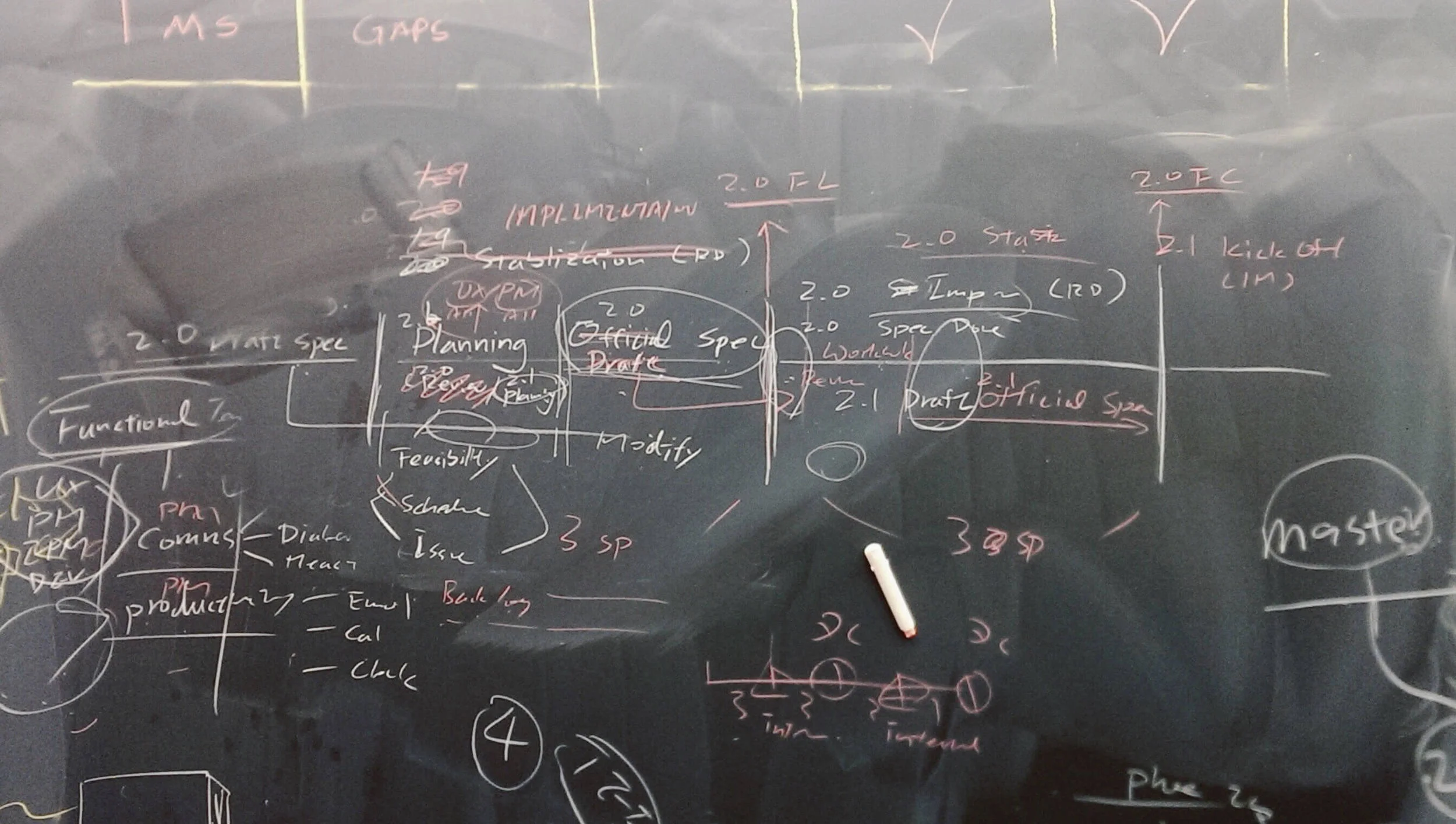
Nike's Tmall store in China
My role
• Role: Project lead / Duration: 2017 Q1 – 2018 Q2
• I set the design direction, worked on the research and design with the team, reviewed every deliverable and presented the work to Nike.
Key decision: Change the store one module at a time, for a limited period, and keep a change only if click-through, conversion and traffic held up. That let Nike refresh the store without putting revenue at risk.
Project background
Nike is the top-selling sportswear brand on Tmall, China's leading e-commerce platform. It opened its first official Tmall store in 2012, and while we worked together from 2017 it added two more: the first standalone online Jordan flagship and a Nike Young Athletes store. Tmall is built for selling, so our goal was always to balance brand and revenue. We focused on three areas:
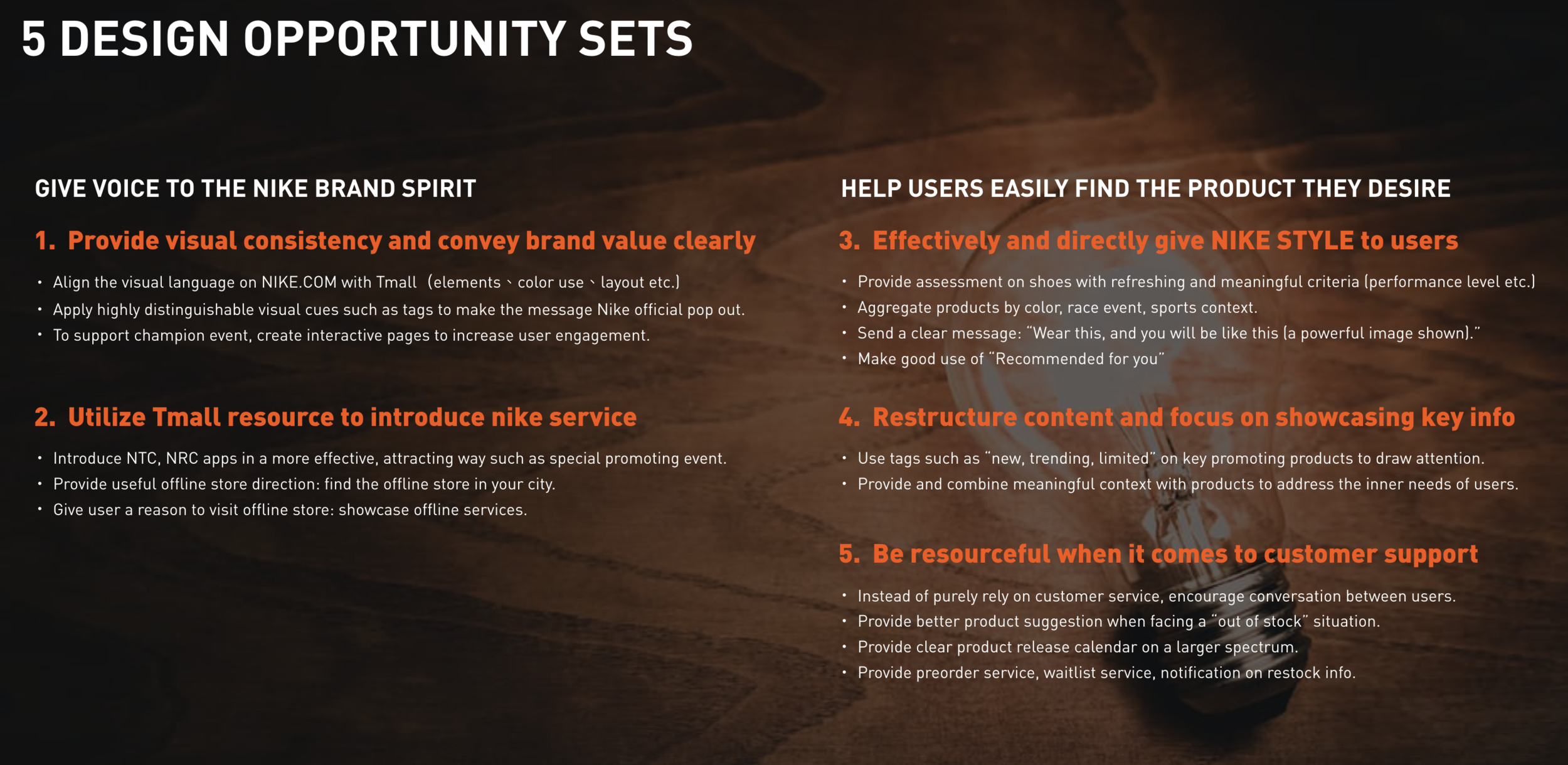
Store usability: small, regular improvements to how store modules work, using Tmall's platform features to help people explore products and keep the store feeling fresh.
Campaign pages: reusable templates that cut design cost and made each campaign faster to produce.
Conversion: bring Nike membership into Tmall step by step, and use customer data to personalise the store.
Approach
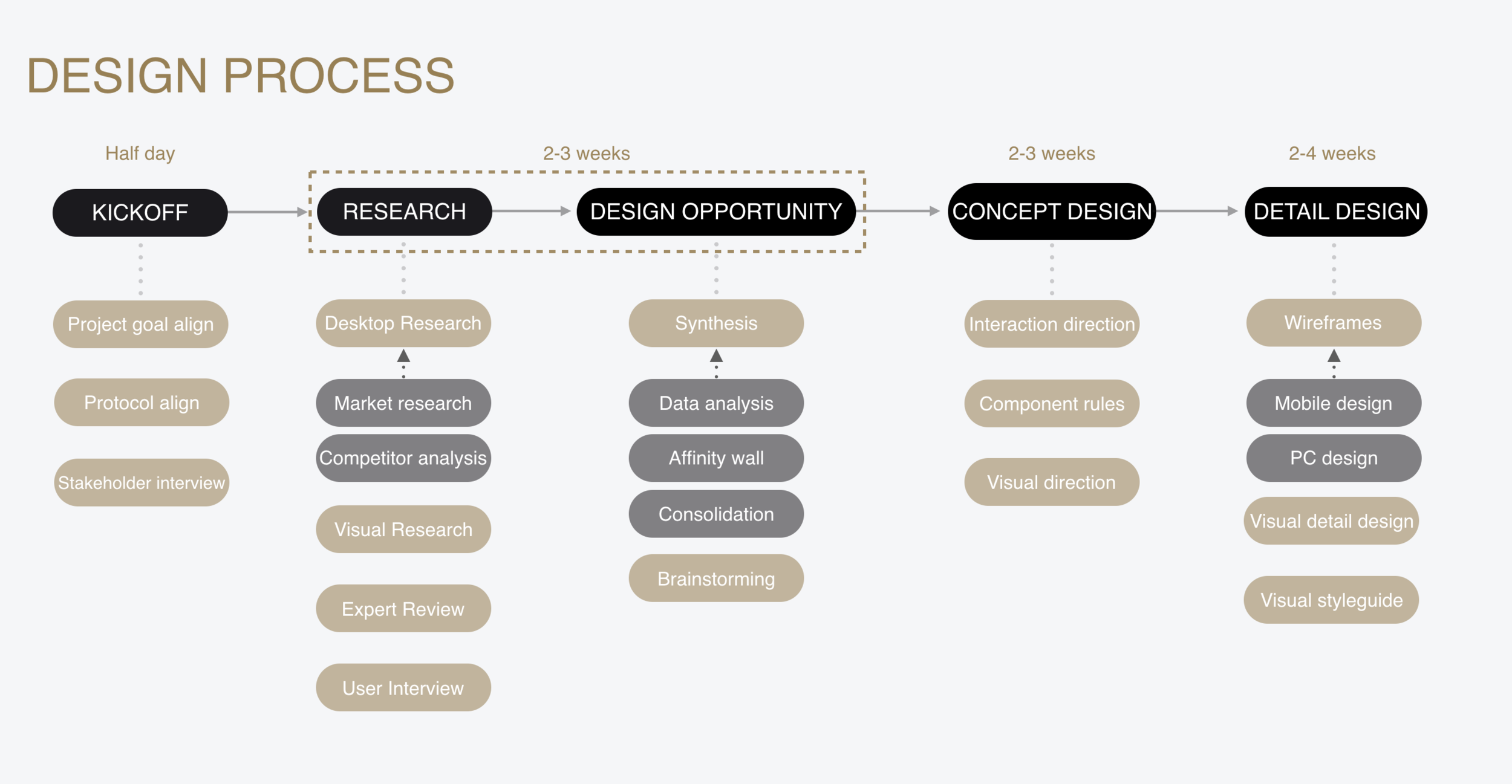
Three phases: research and opportunities, concept design, then detailed design.
Market and competitors: where Nike stood on digital services and real customer needs compared with other brands.
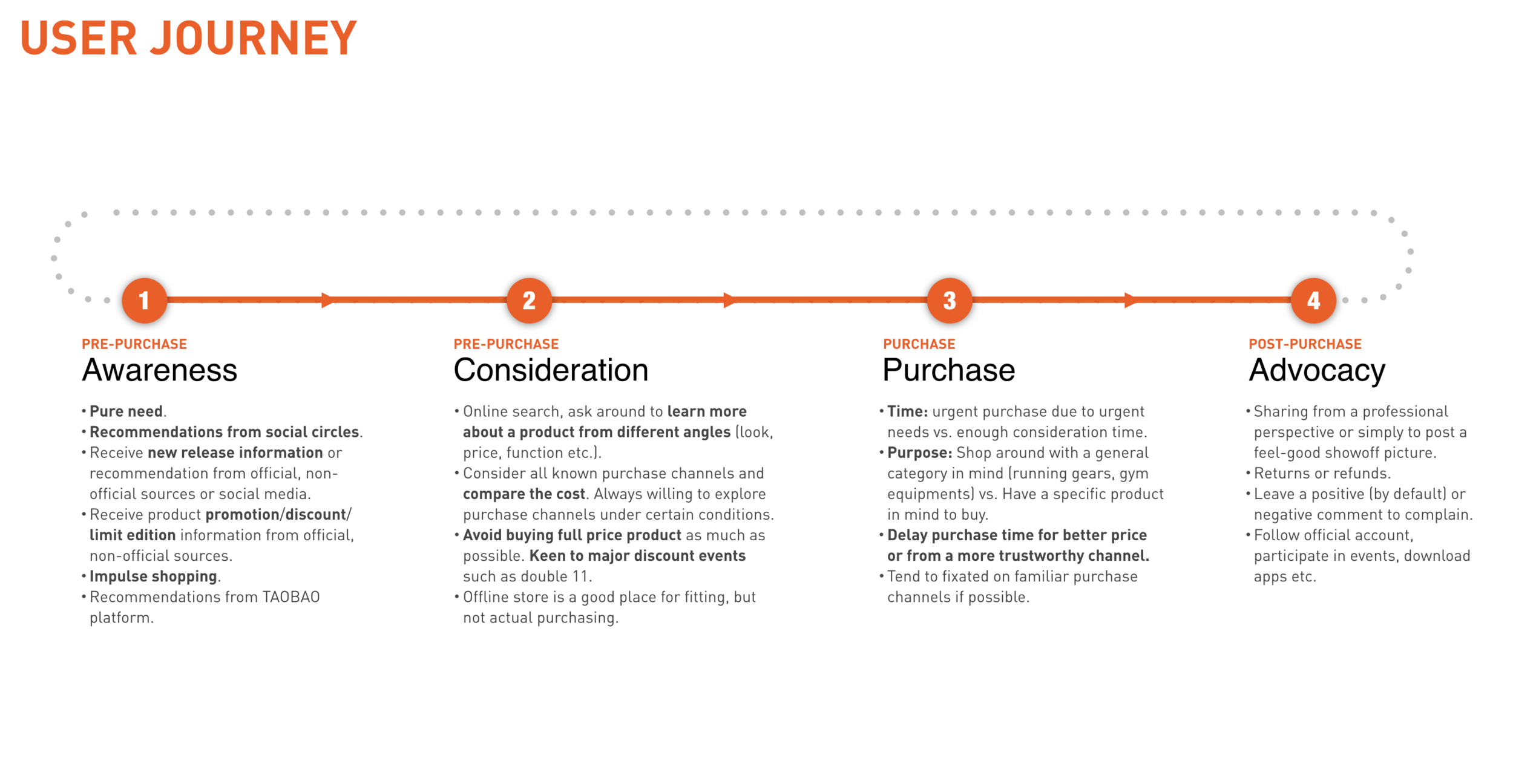
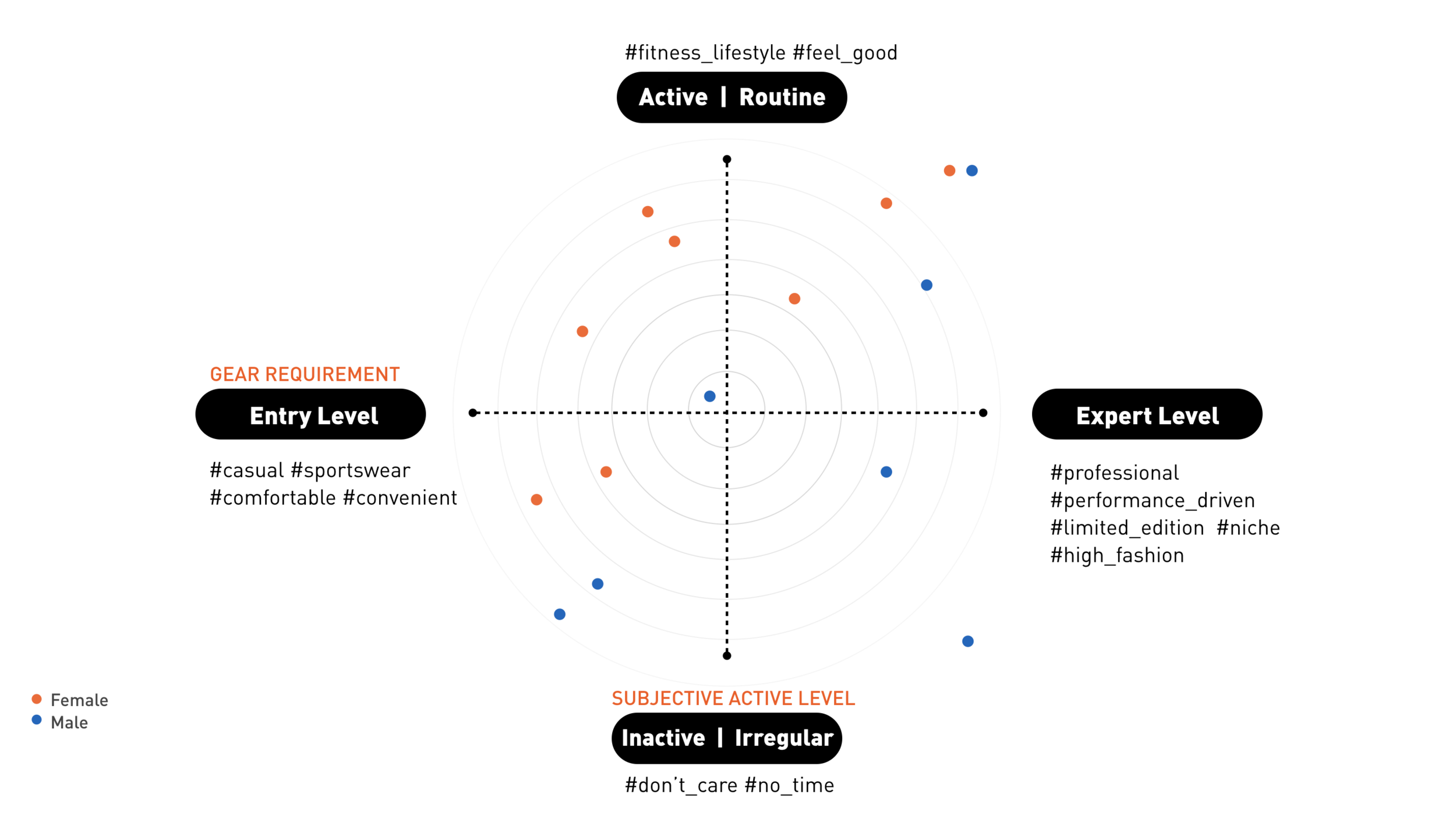
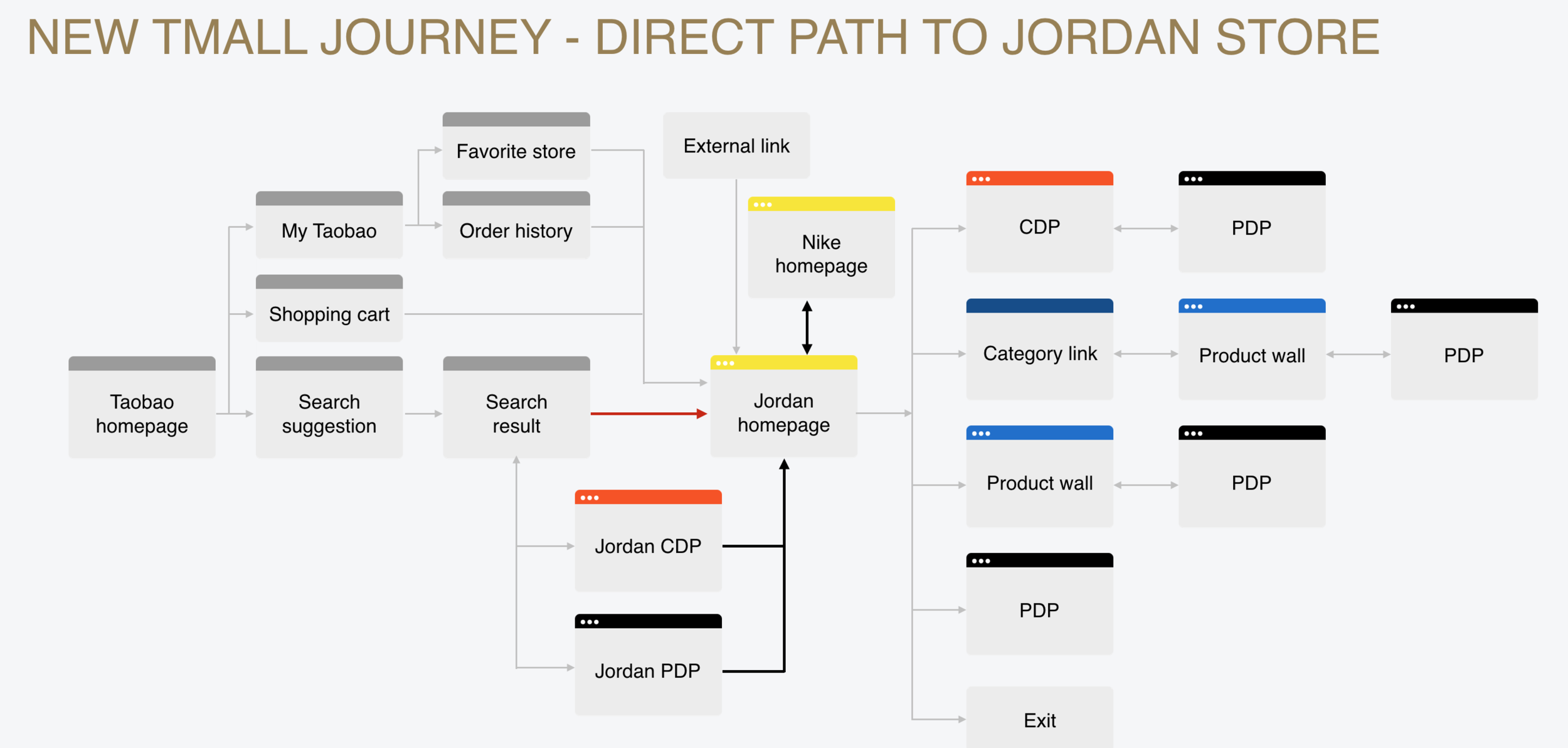
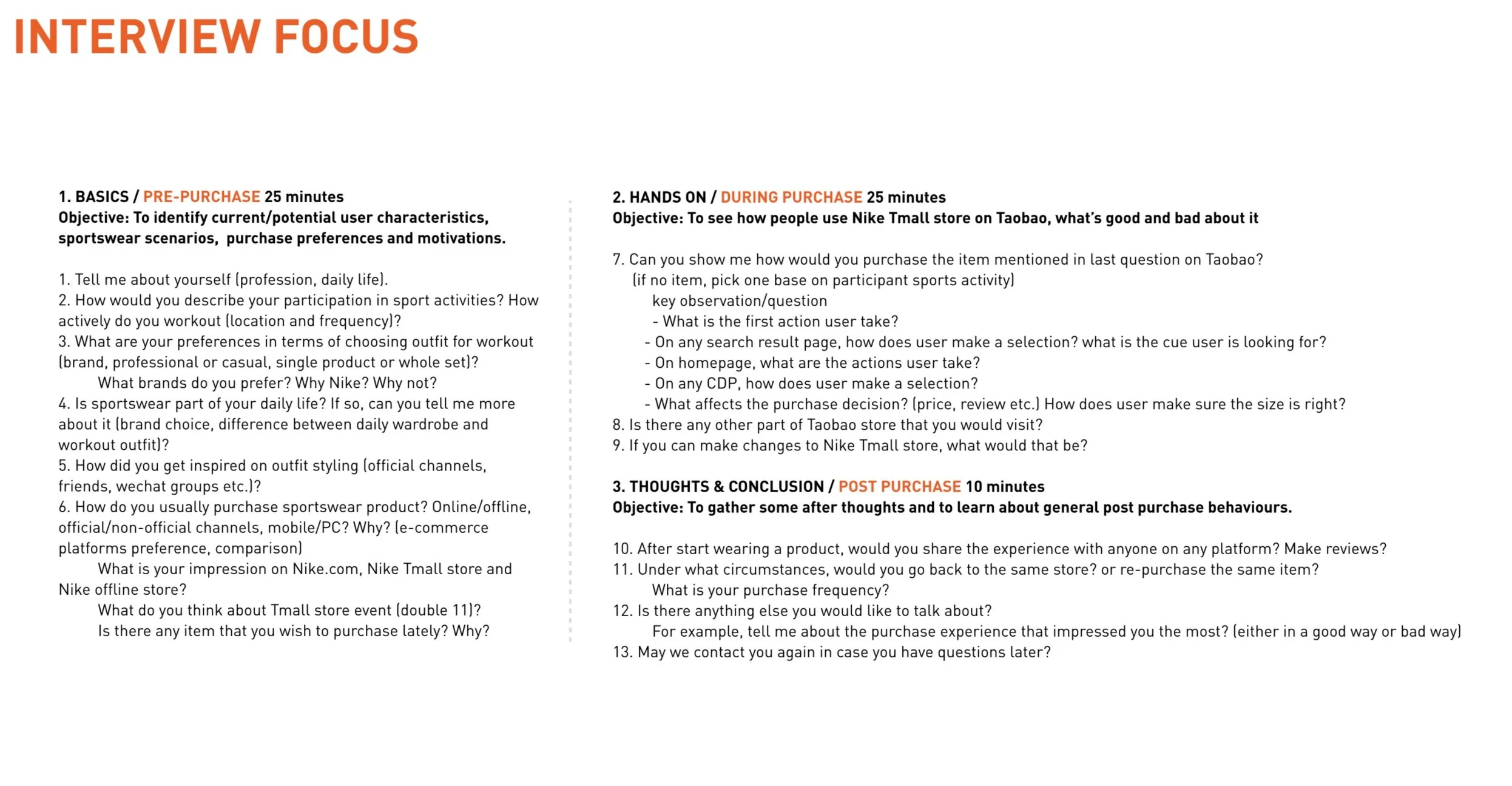
Interviews, personas and journeys: how Tmall store customers decide and buy.
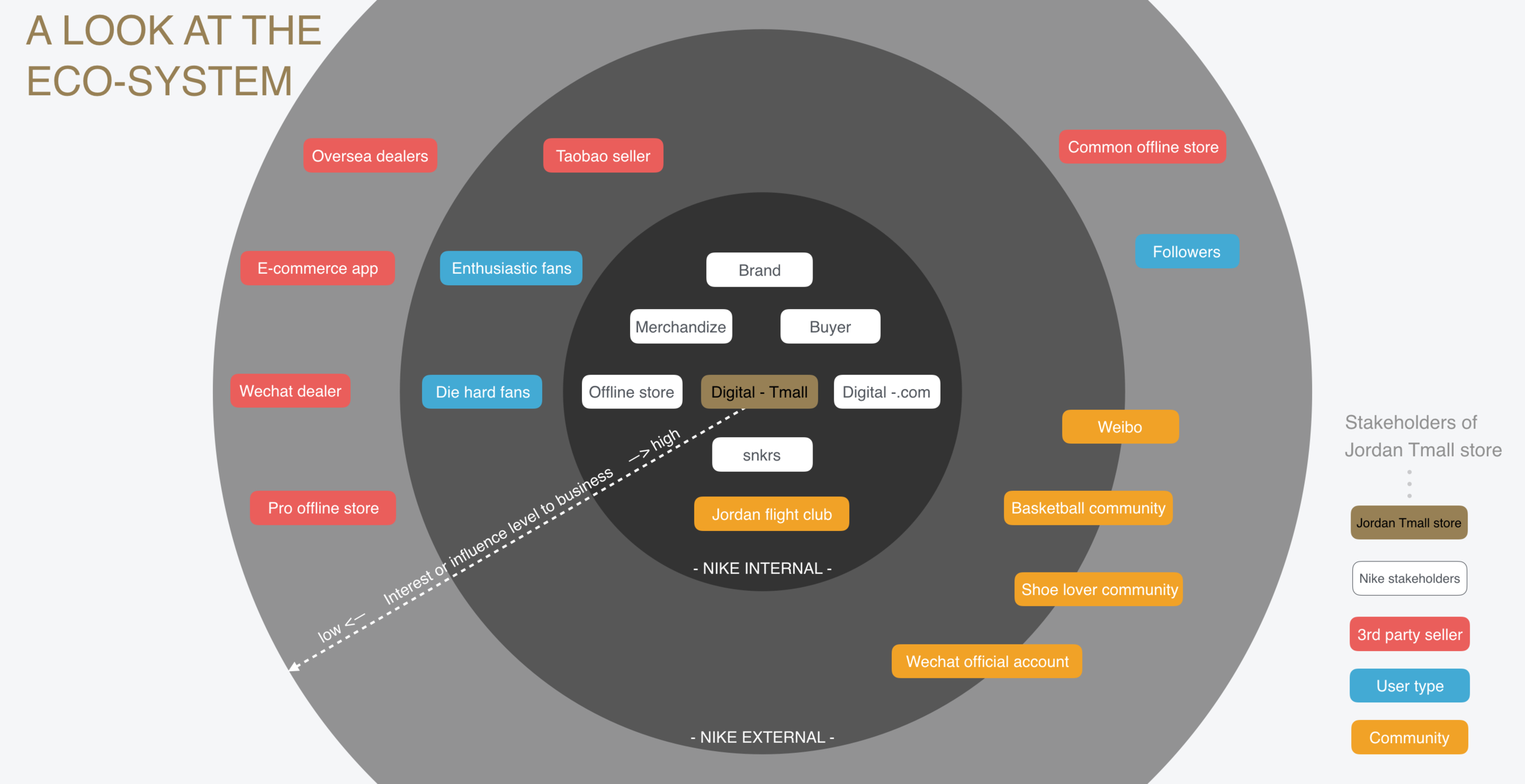
Stakeholder mapping: who the project depended on, and how the new design would affect them.
Synthesis: recommendations on service integration, personalisation, digital channel strategy and retail innovation.
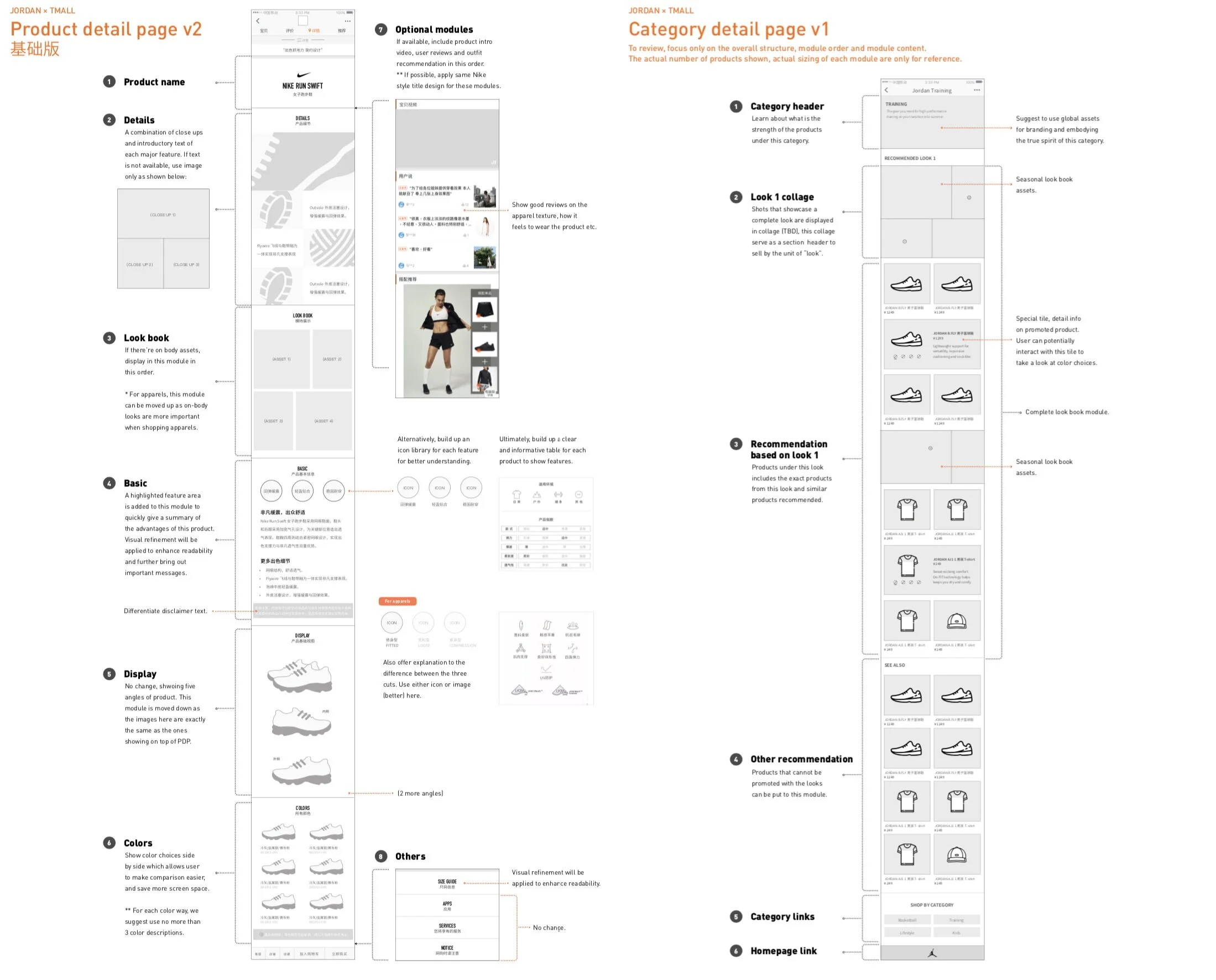
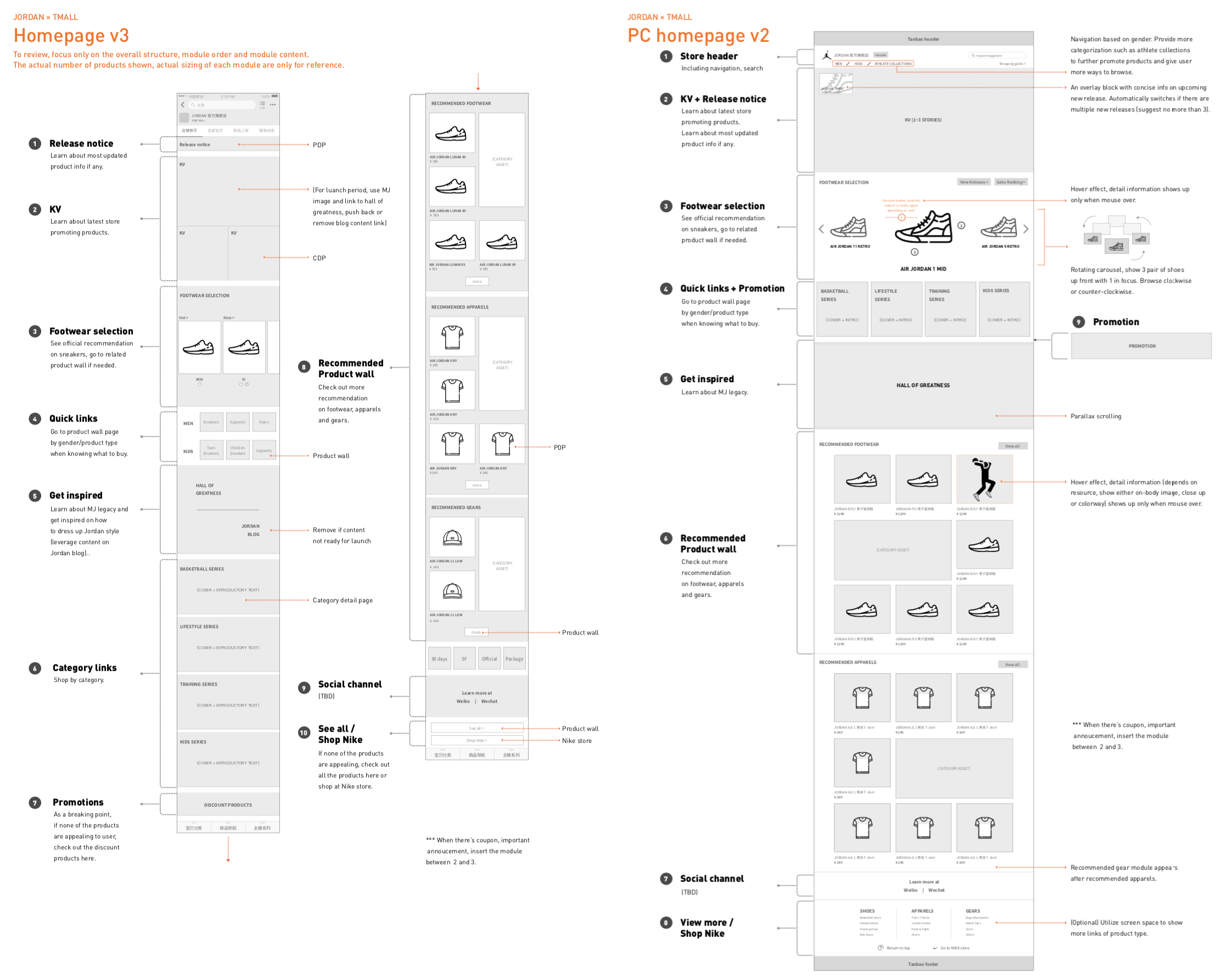
Concept: module layouts, display logic and information structure, based on the research.
Visual design: look and feel, built on Nike's brand style guide.
Takeaways
What made the Nike Tmall store hard?
In China's big cities, people can buy Nike in at least five ways. Tmall is the most sales-driven of them: shoppers expect bargains there and use it to check prices. But younger shoppers, now the main source of store revenue, are less price-sensitive and care more about the brand. Tmall's fast payment and delivery no longer set it apart, and shoppers judge the experience before and after the purchase, not just at checkout.
Tmall responded by adding membership and giving brands tools to personalise their stores with its customer data. That let Nike offer a fuller brand experience: better product selection, brand content, proper customer service and closer ties to official campaigns. So the store's design direction depended on Tmall's own strategy.
A real upgrade needed content (rich product information, brand stories, articles) and system integration (membership, sign-up for offline events), and it could not put revenue at risk. So we changed one module at a time, for a limited period, then checked the data (click-through, conversion, traffic) to decide whether to keep the change. A named person at Nike owned the process, watched the numbers and planned for the longer term.
The hardest questions were about the partnership itself: how much customer data Nike could use and for how long, how to connect Nike's systems to Tmall's without disrupting them, and how to grow Tmall revenue without pulling customers away from Nike's own app and stores. Each answer shaped the store design, so our job as the agency was to make sure Nike's decision-makers had clear advice before they chose.
Work done @ ARK Innovation Consulting / 2017–2018