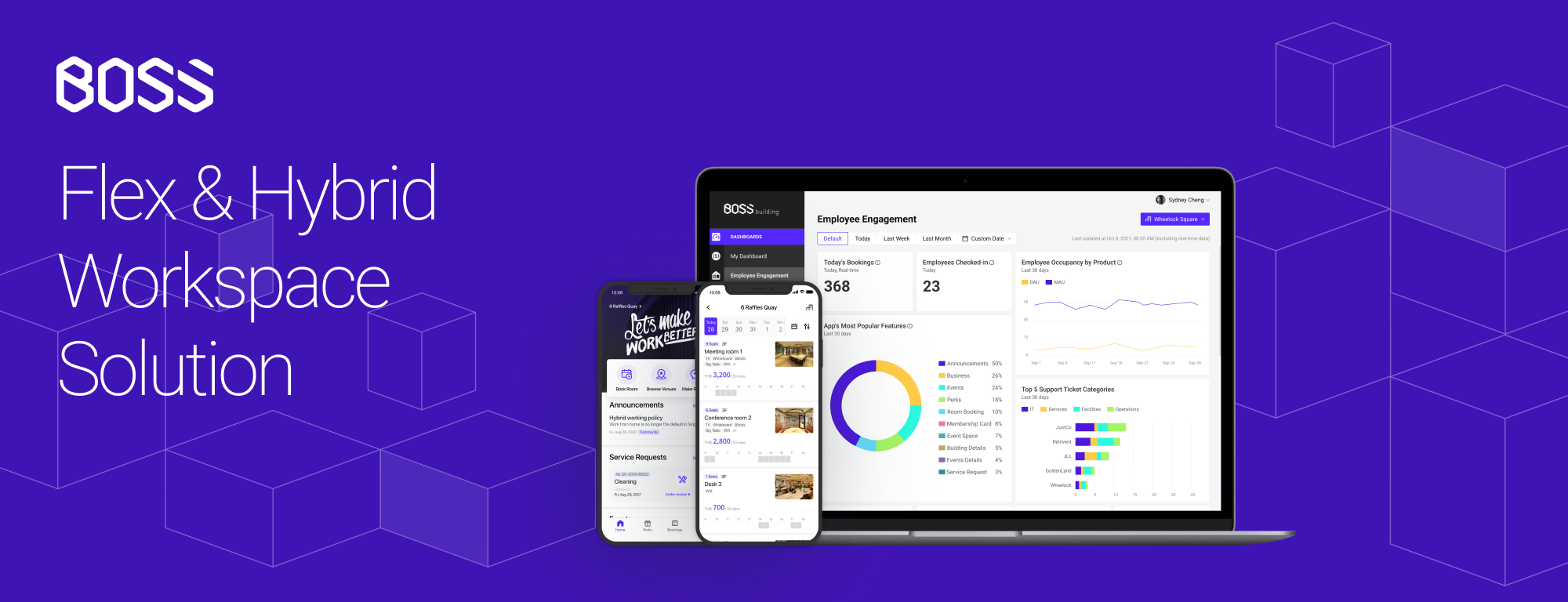
Operations software for coworking spaces
My role
BOSS was a business operating system for workspaces, built by REinvent, a property-tech startup. Work started in July 2020 and it was ready to launch in Singapore in December 2021.
What I did:
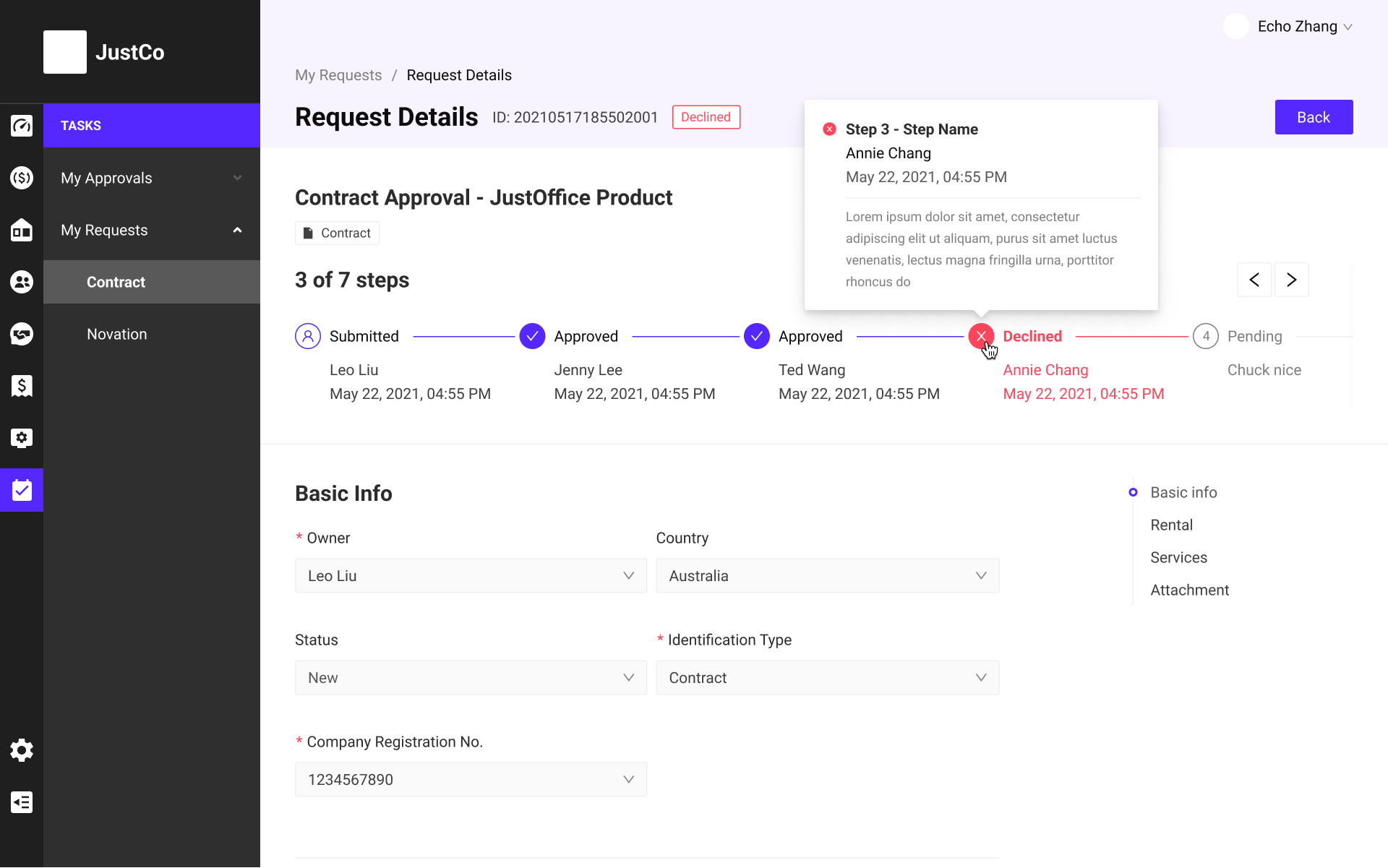
Designed the feature-specific components, such as the workflow builder, dashboards and floor-plan editor, where complex business rules had to stay simple to use.
Defined the layout system: baseline page structures, grids and responsive rules for every layout type.
Built the design system shared by nine modules, and kept it in sync with the engineering component library.
Broke down complex, unclear problems on tight timelines, and helped the team find simple solutions.
Reviewed and mentored the designers on the team, with clear feedback on the “why”.
Project background
BOSS (Business Operating System for Space) brought workspace operations into one place: tenant lifecycles, sales, billing and flexible and hybrid workspace management, for landlords and operators.
As hybrid work took off during the pandemic, landlords and operators had to run flexible space with tools built for fixed leases. BOSS aimed to help them give tenants a better experience, keep them longer and run the business with fewer manual steps. The full feature scope is shown above.
Key product offerings
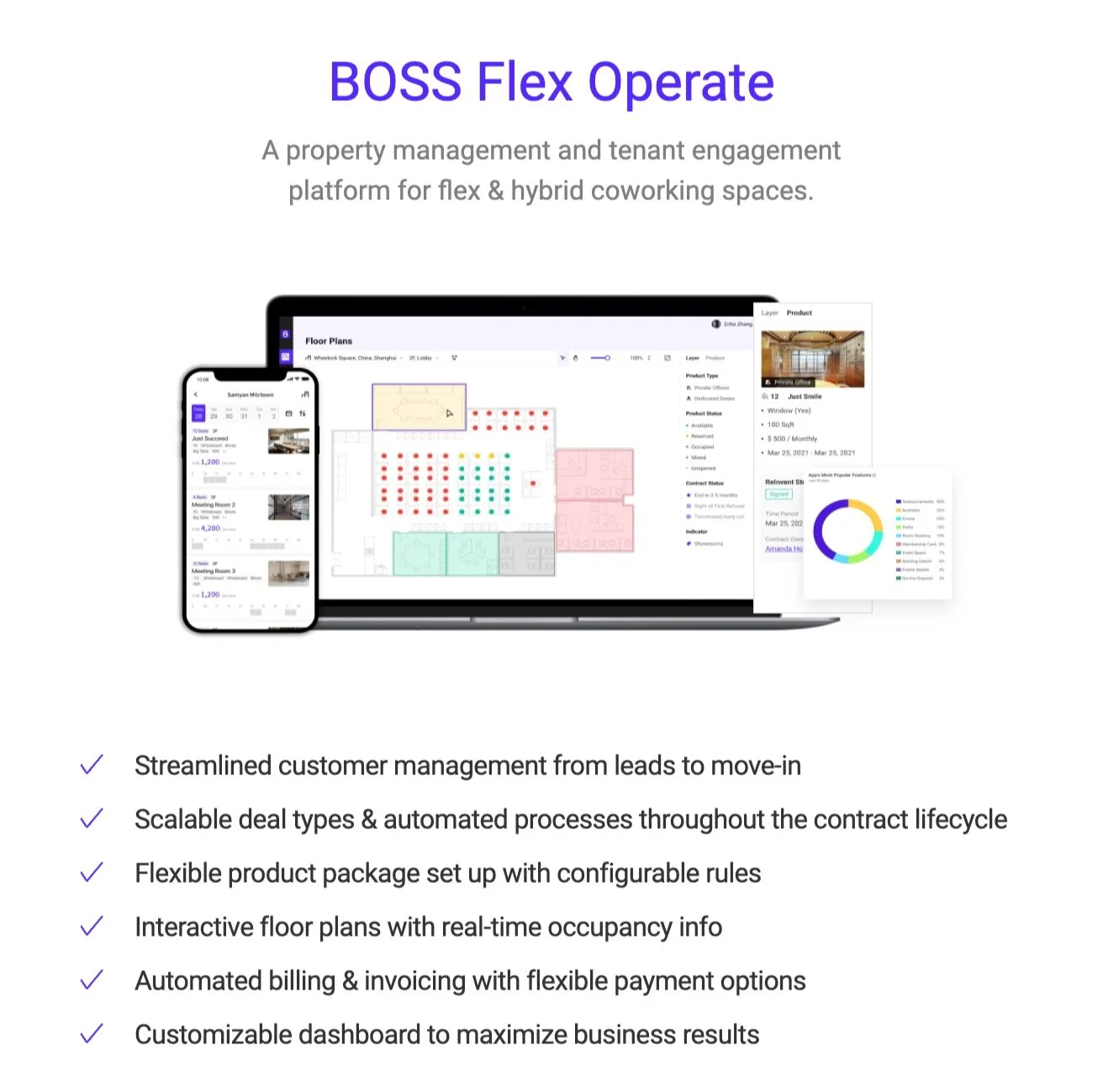
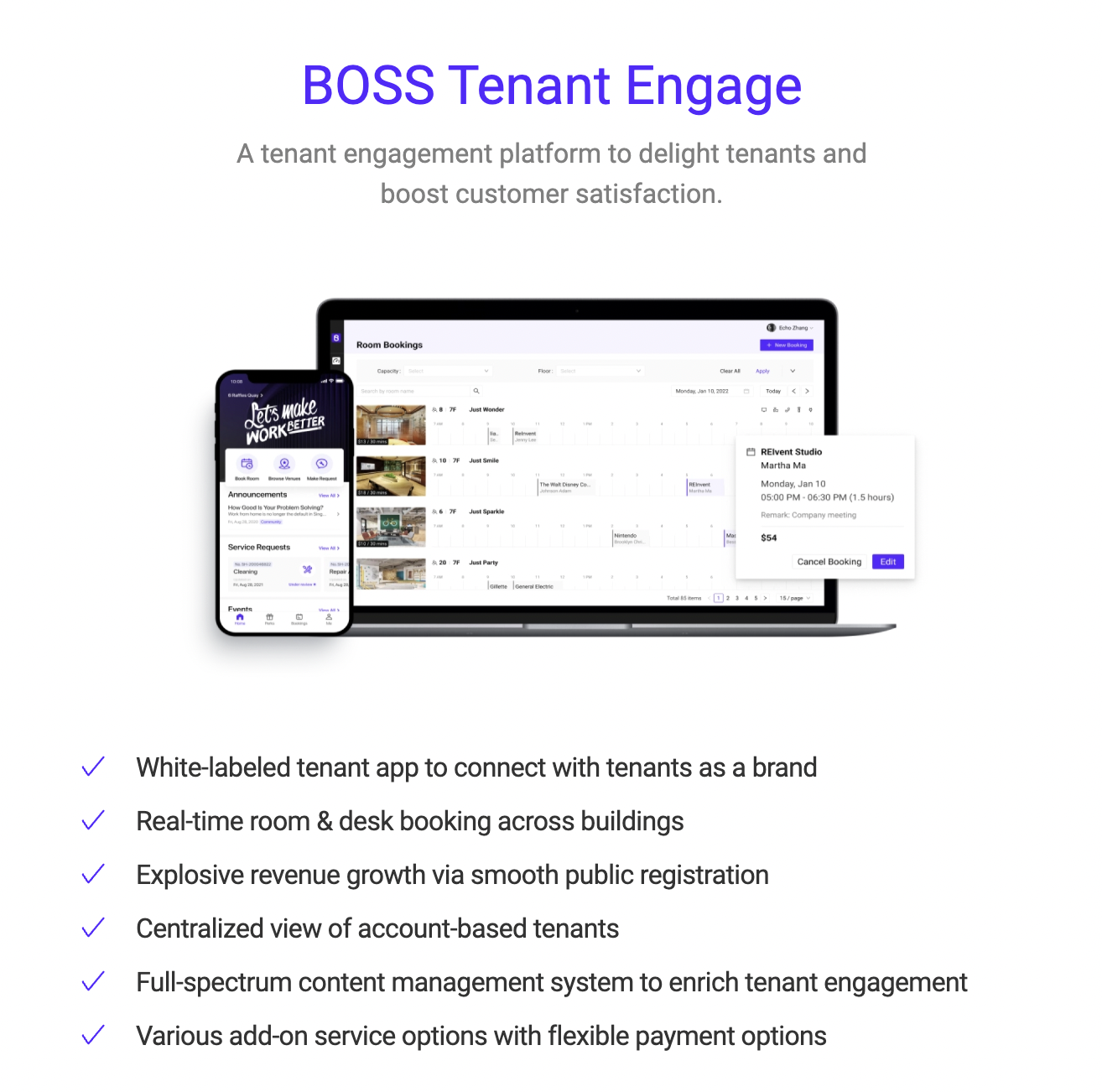
Modules combine depending on who uses them. Flex Operate covers the whole customer journey, from leads and contract approval to tenant engagement. Engage helps operators build experiences that keep tenants coming back.
Target customers
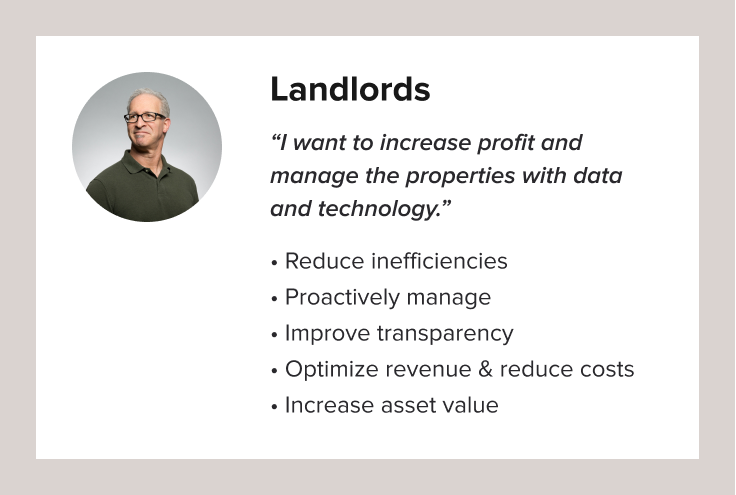
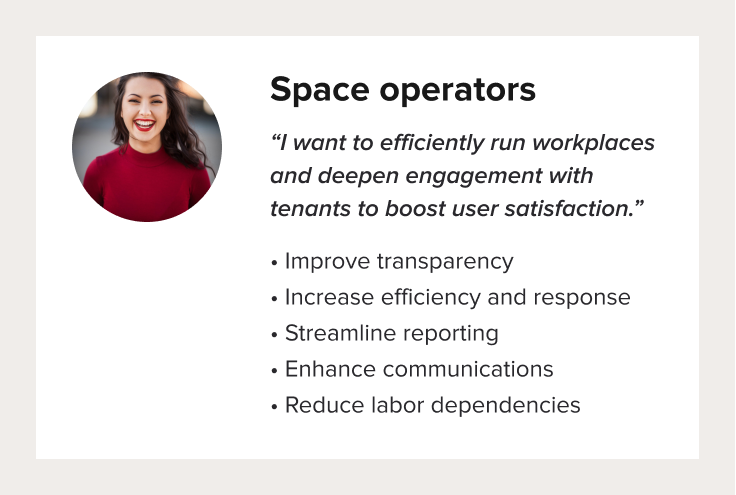
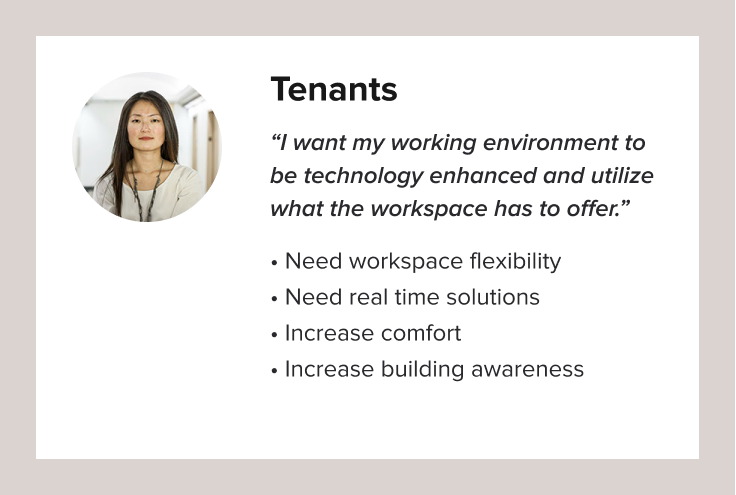
BOSS served every type of building stakeholder:
How I worked
Same rhythm as Switch: two-week sprints in squads with product and engineering. For each feature, study 3–5 competitors from different markets, sketch layout and flow, detail it with the design system, then refine it with the team.
What I designed
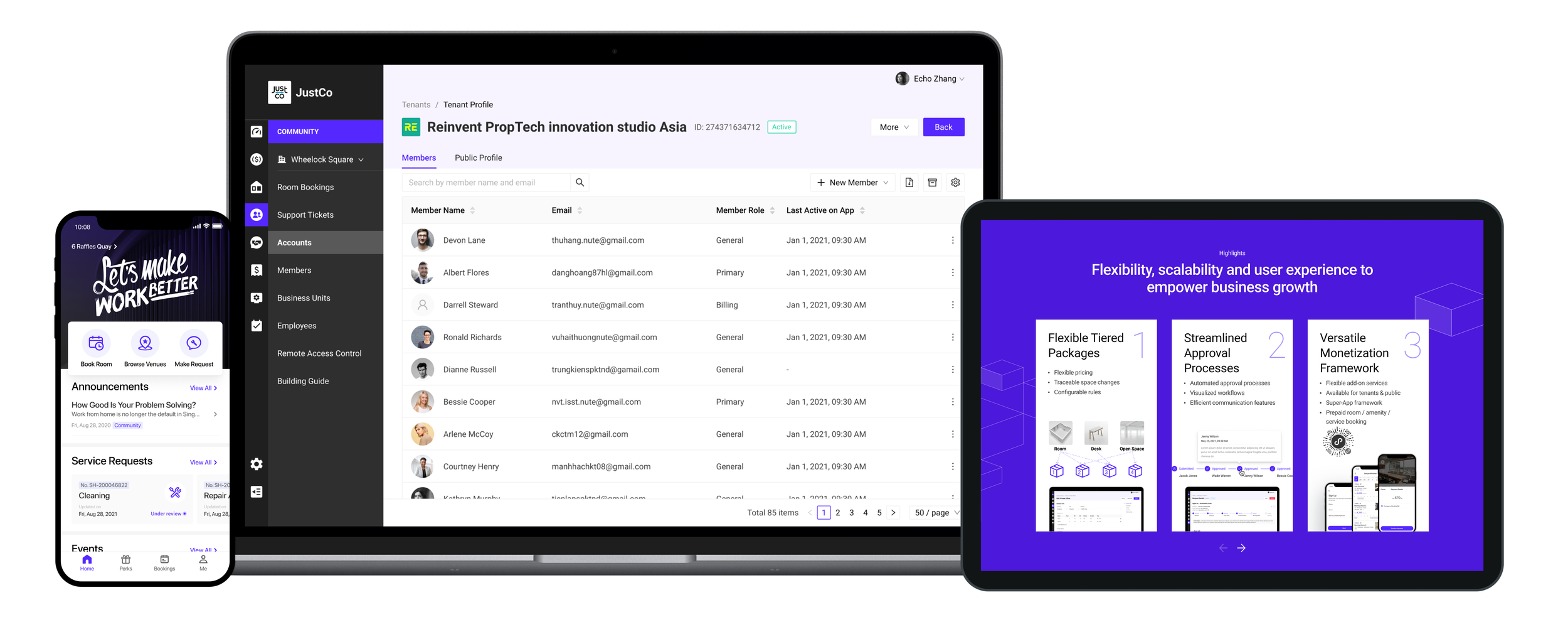
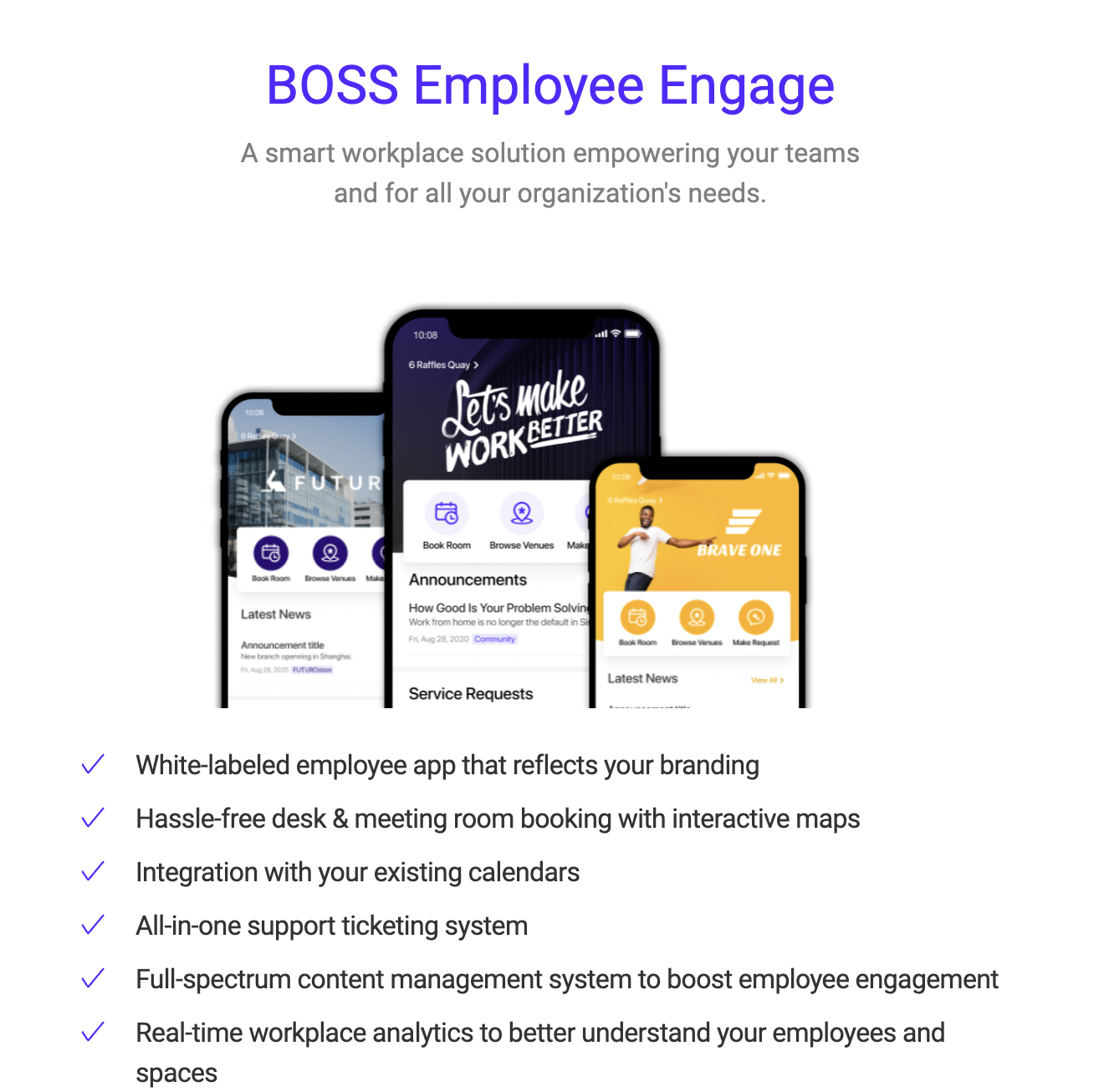
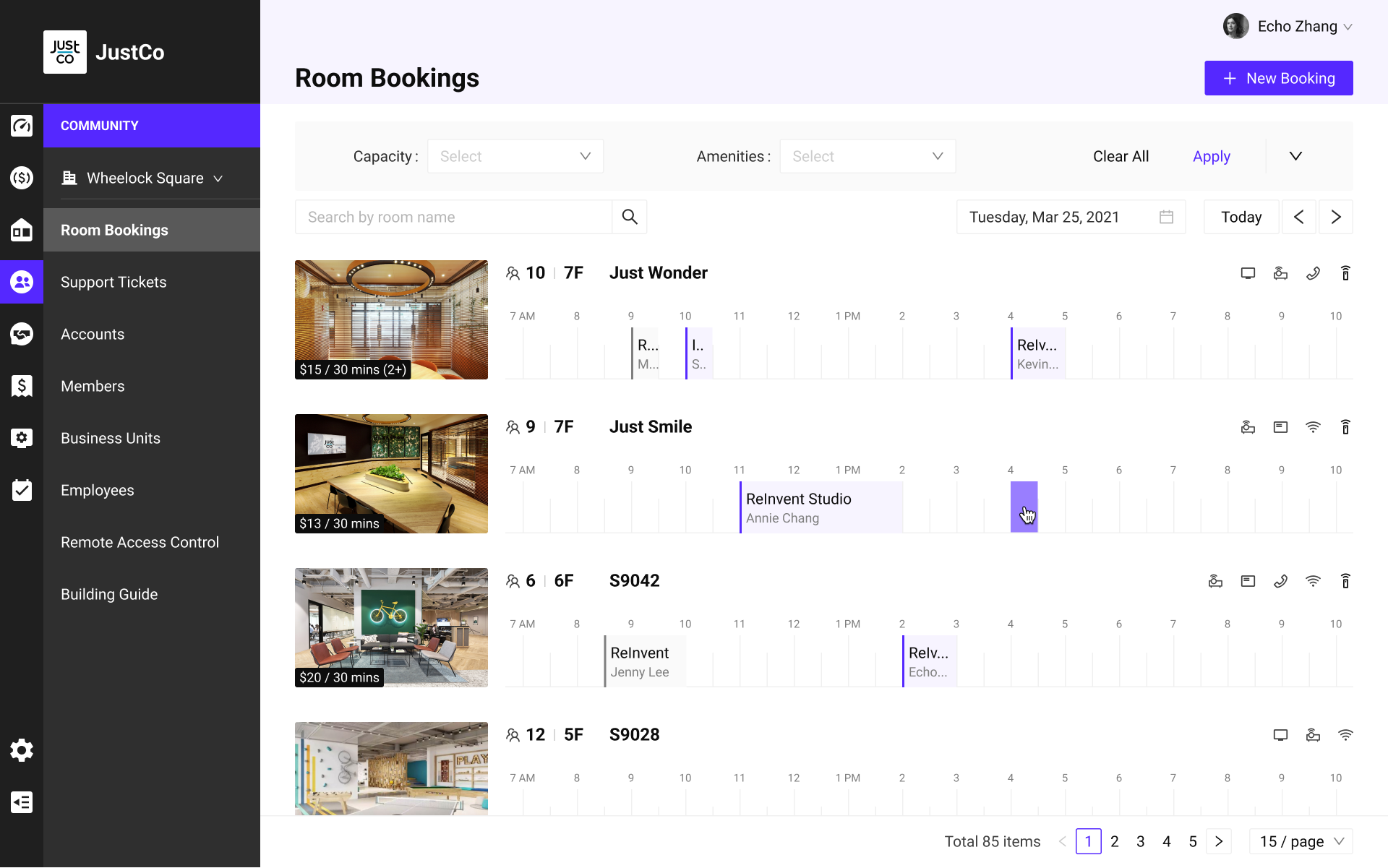
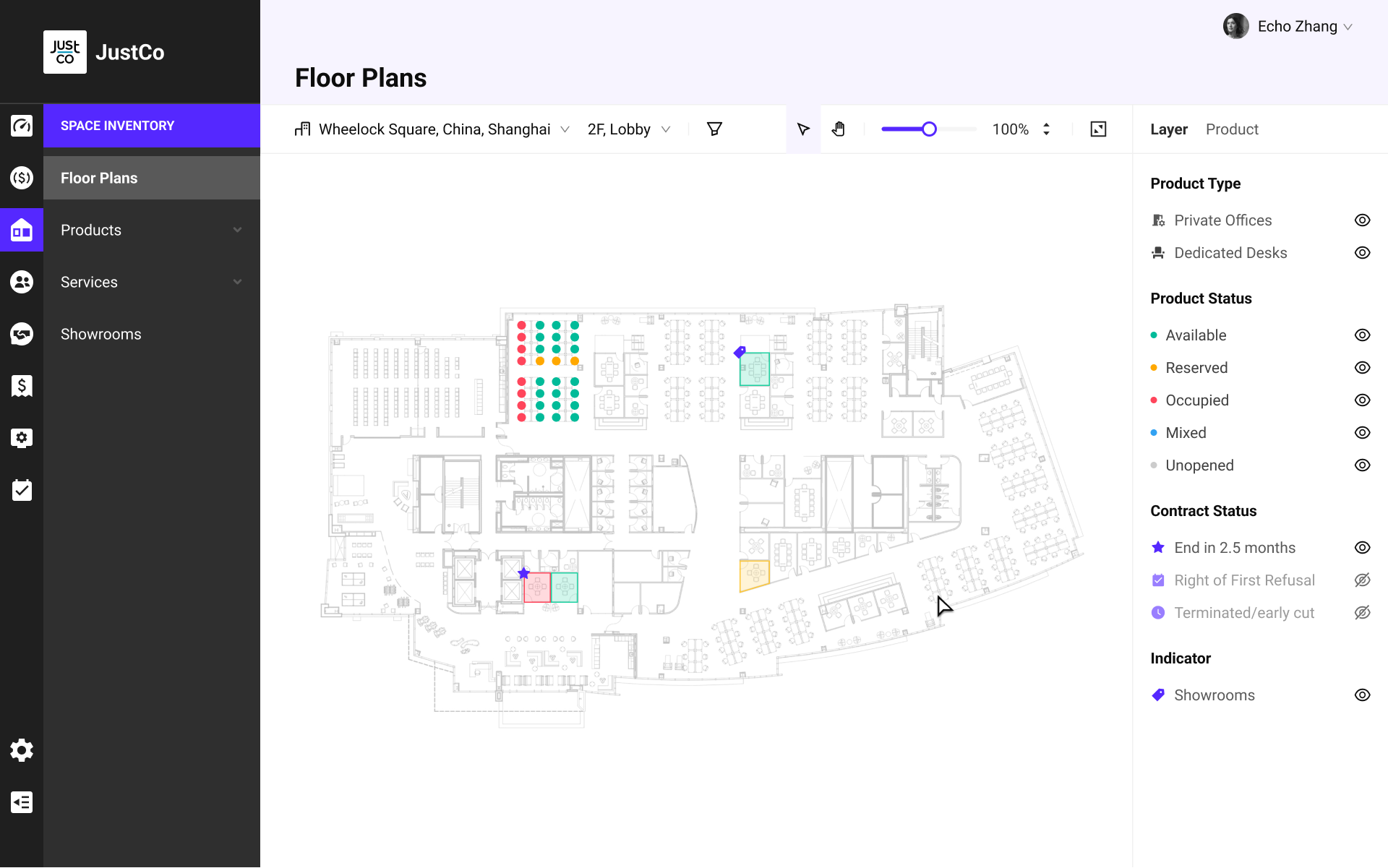
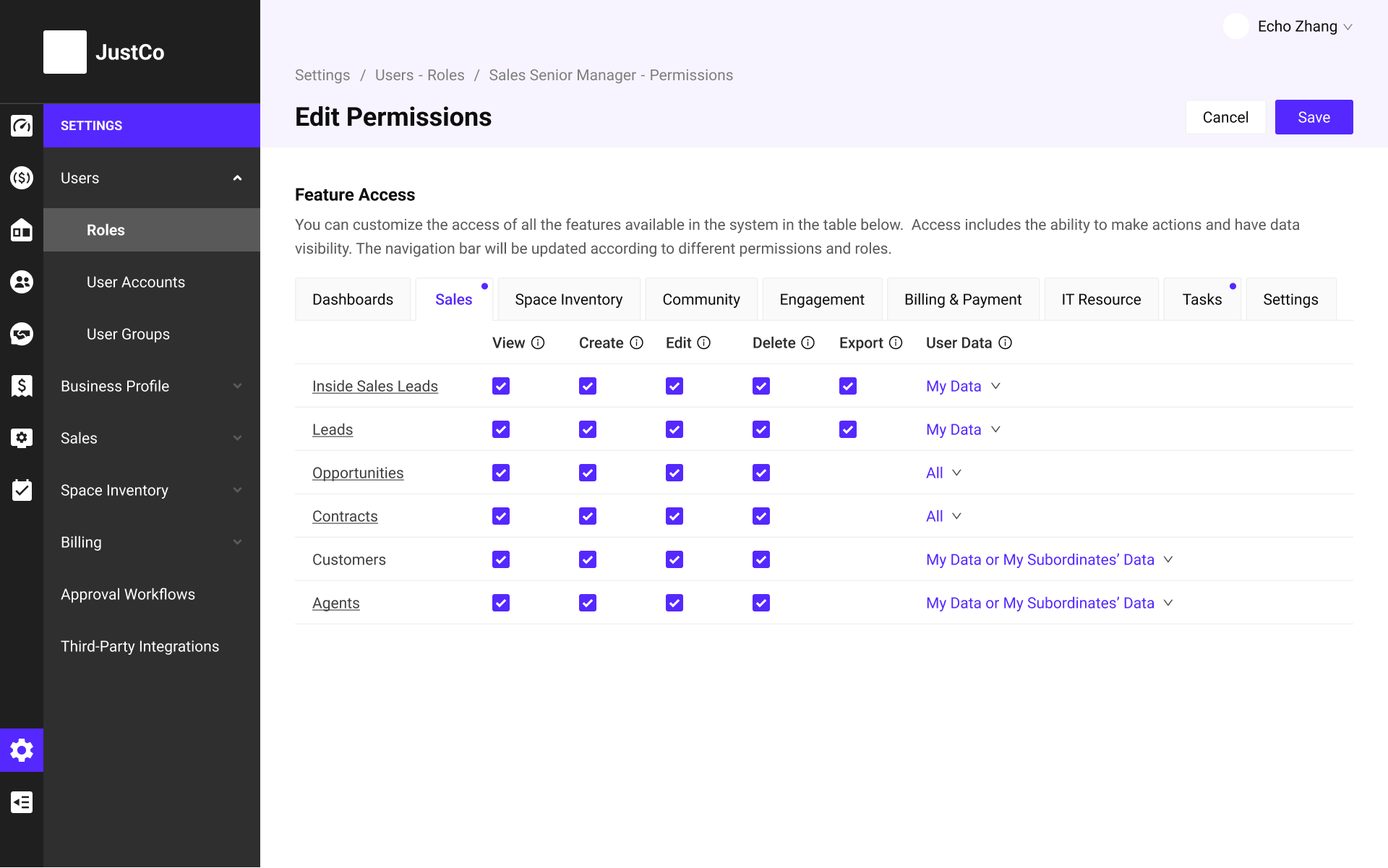
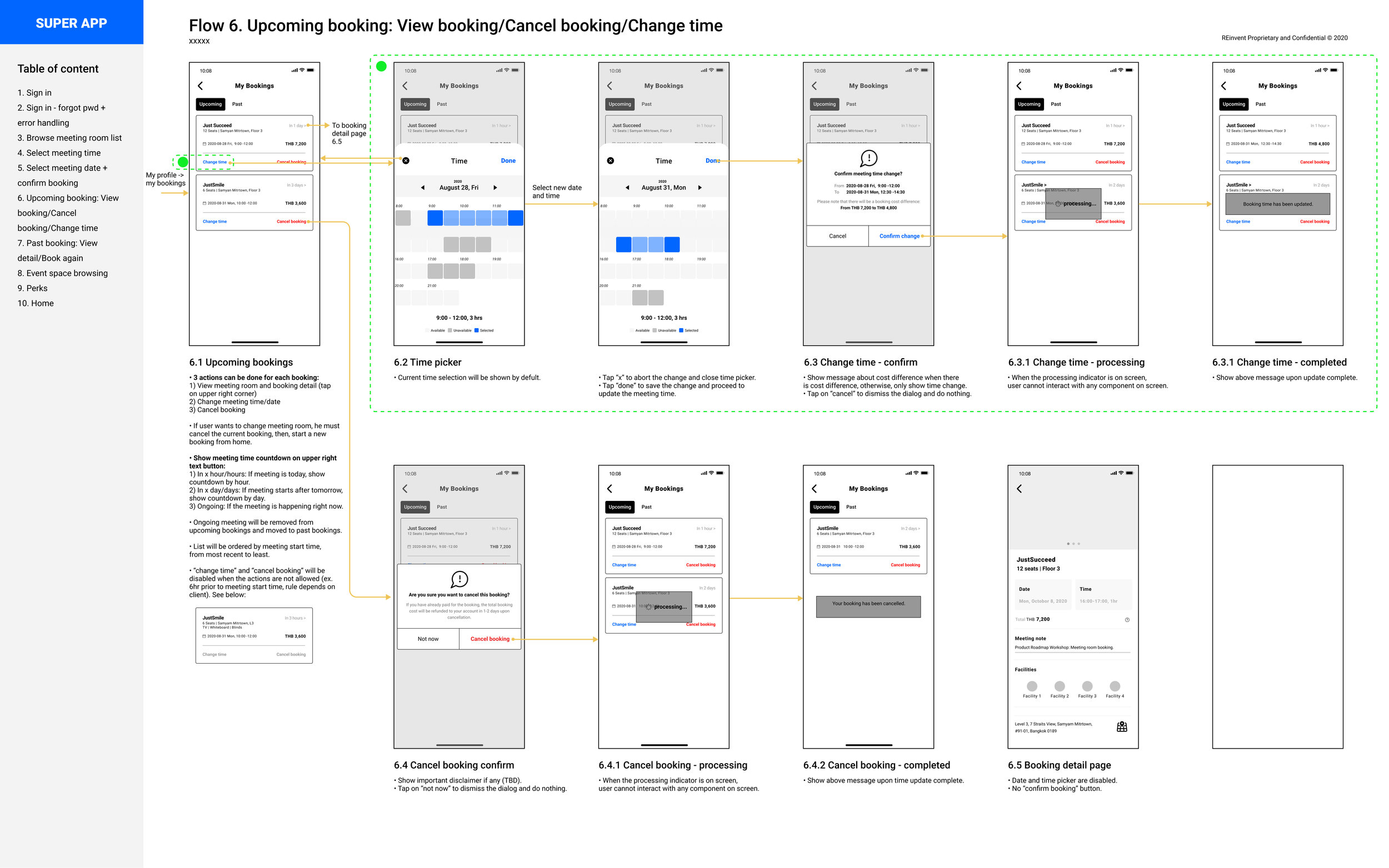
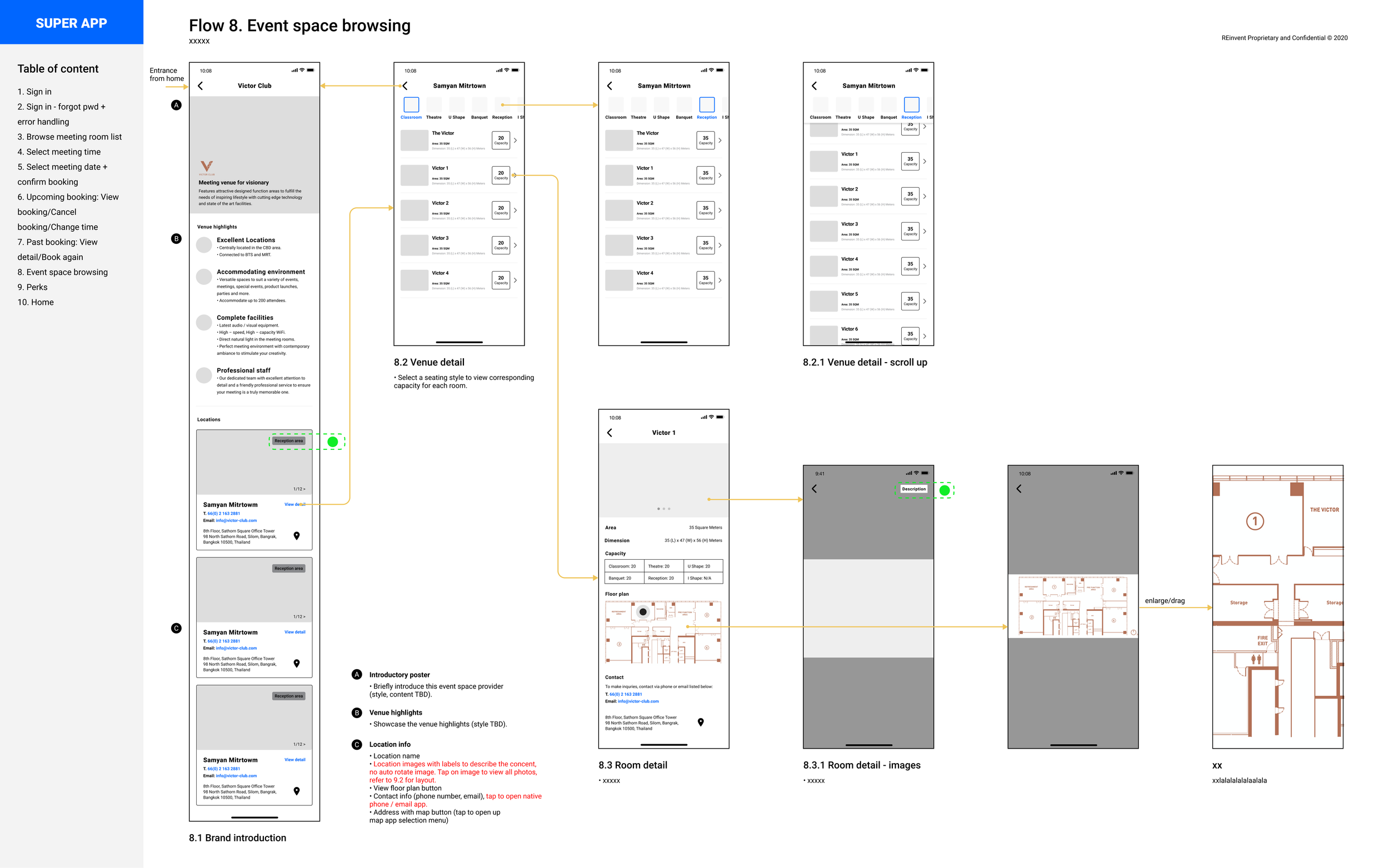
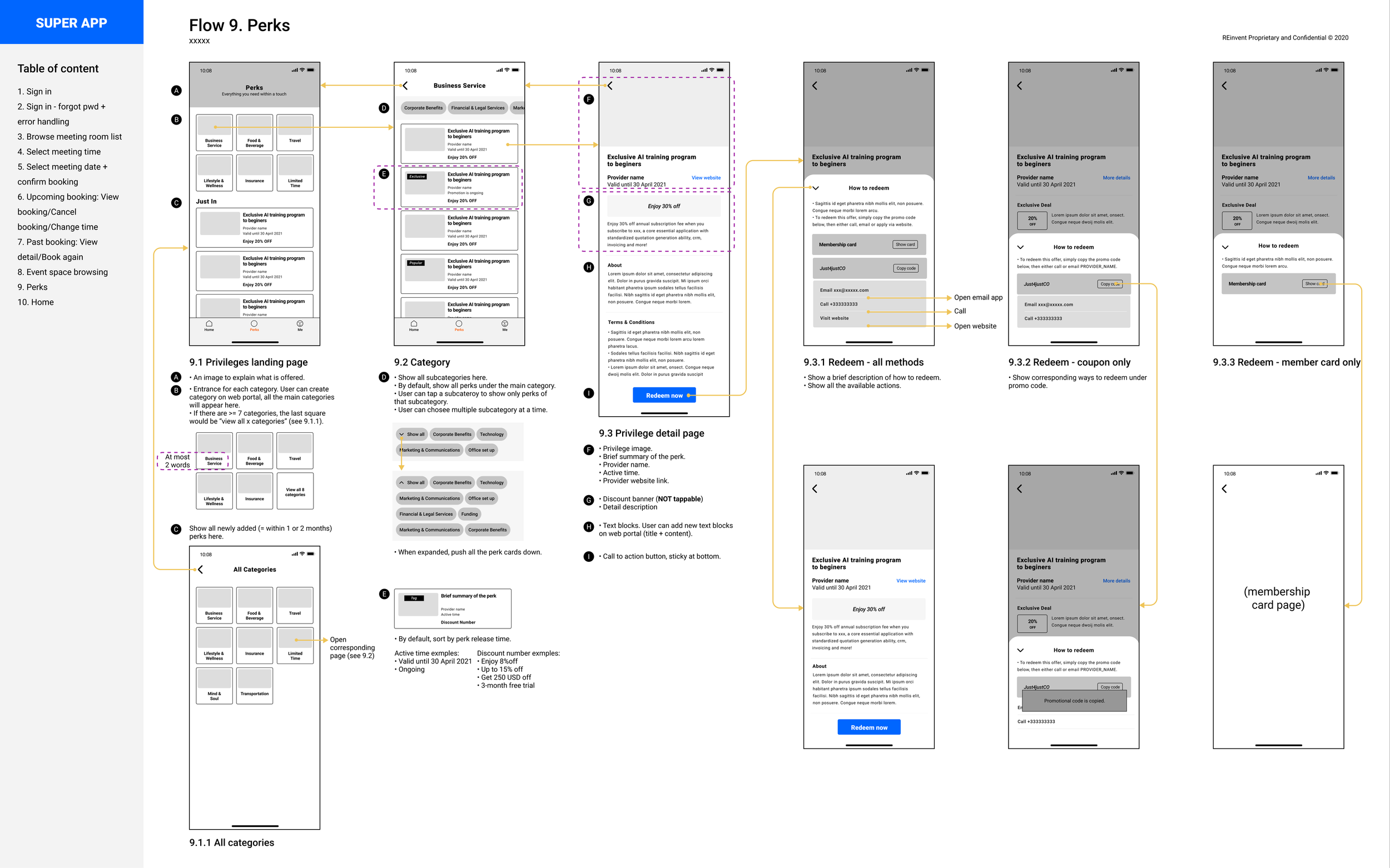
BOSS was big: a web portal with nine core modules (dashboards, sales, space inventory, community, engagement, billing and payments, IT resources, tasks and settings), each with 2–8 key features and 10–40 screens or component variations per feature. A companion app covered community and engagement, with more than ten features: announcements, news, room and event-space booking, service requests, door unlock, invoices and payment, perks, events, member connect, membership and profile.
Data flowed between modules to automate the work, so designing well meant understanding the business logic as deeply as the product managers did.
Highlights
Designs for the app, web portal and website, with a focus on usability, simplicity and consistency.
Baseline layouts, grids and responsive rules for every page type.
Design system: shared basics (inputs, selectors, dropdowns, tables, date and time pickers, pagination) plus feature-specific components such as the workflow builder, dashboards and floor-plan editor.
Component libraries kept in sync with engineering.
Screens
App design:
Web portal design:
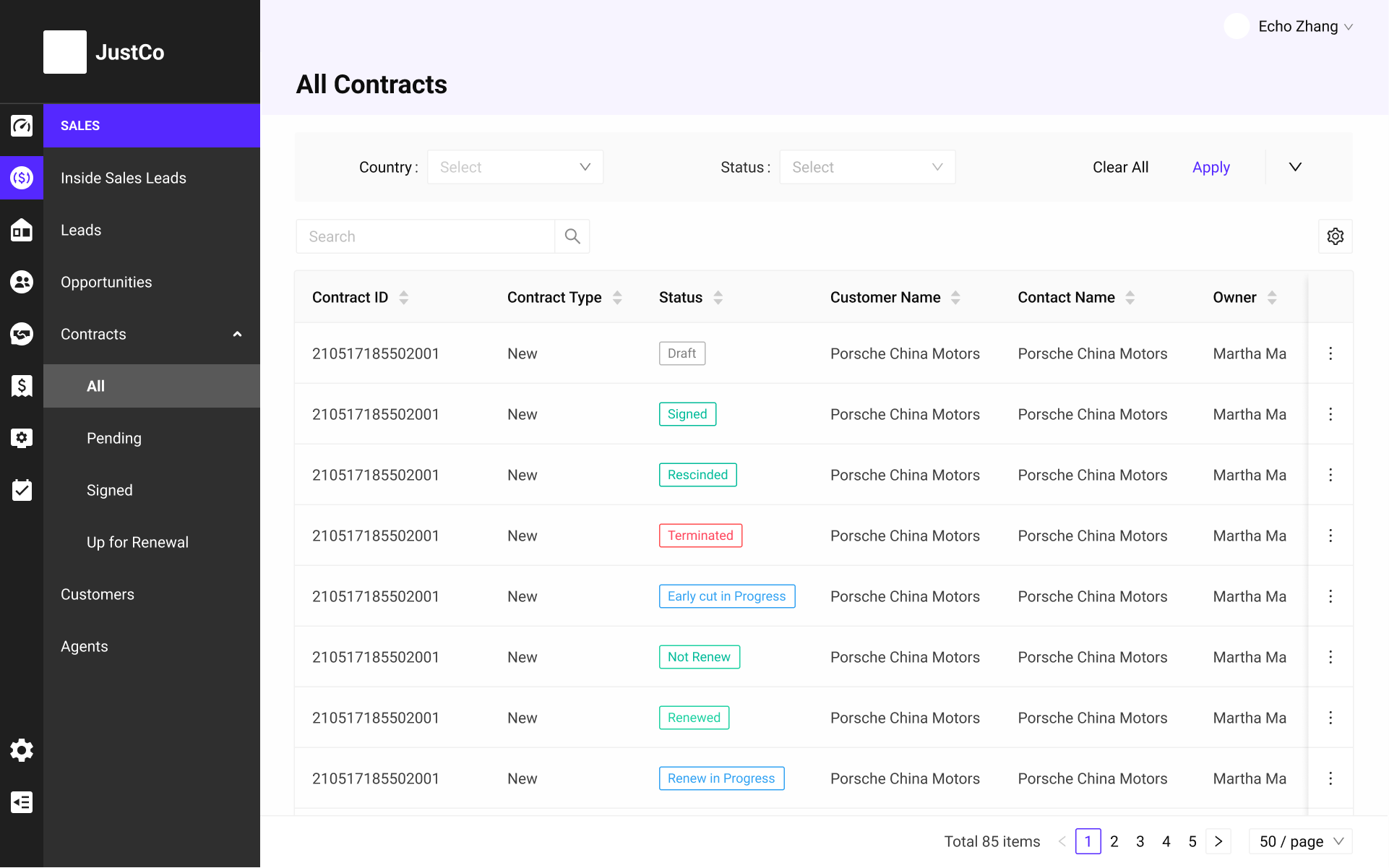
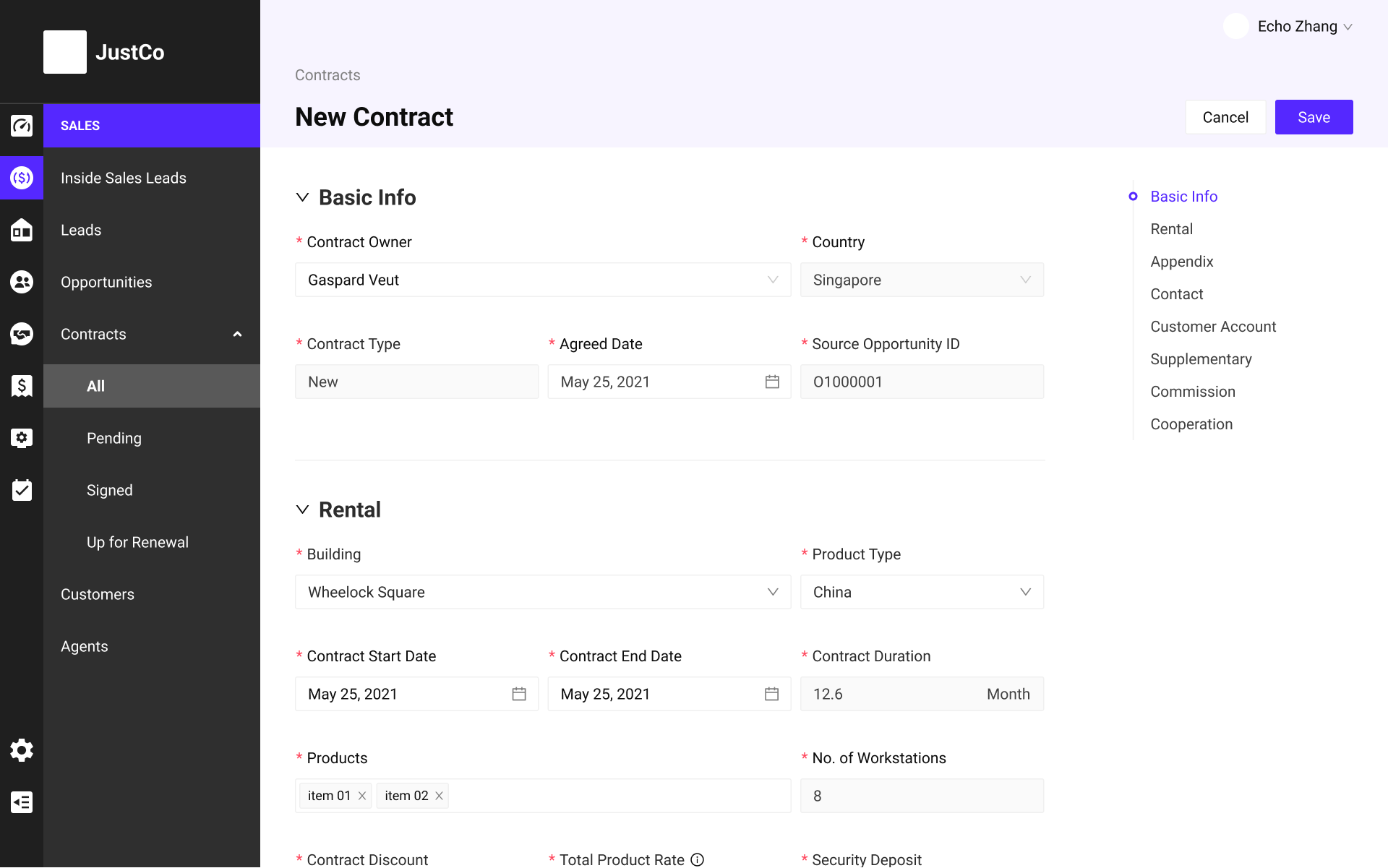
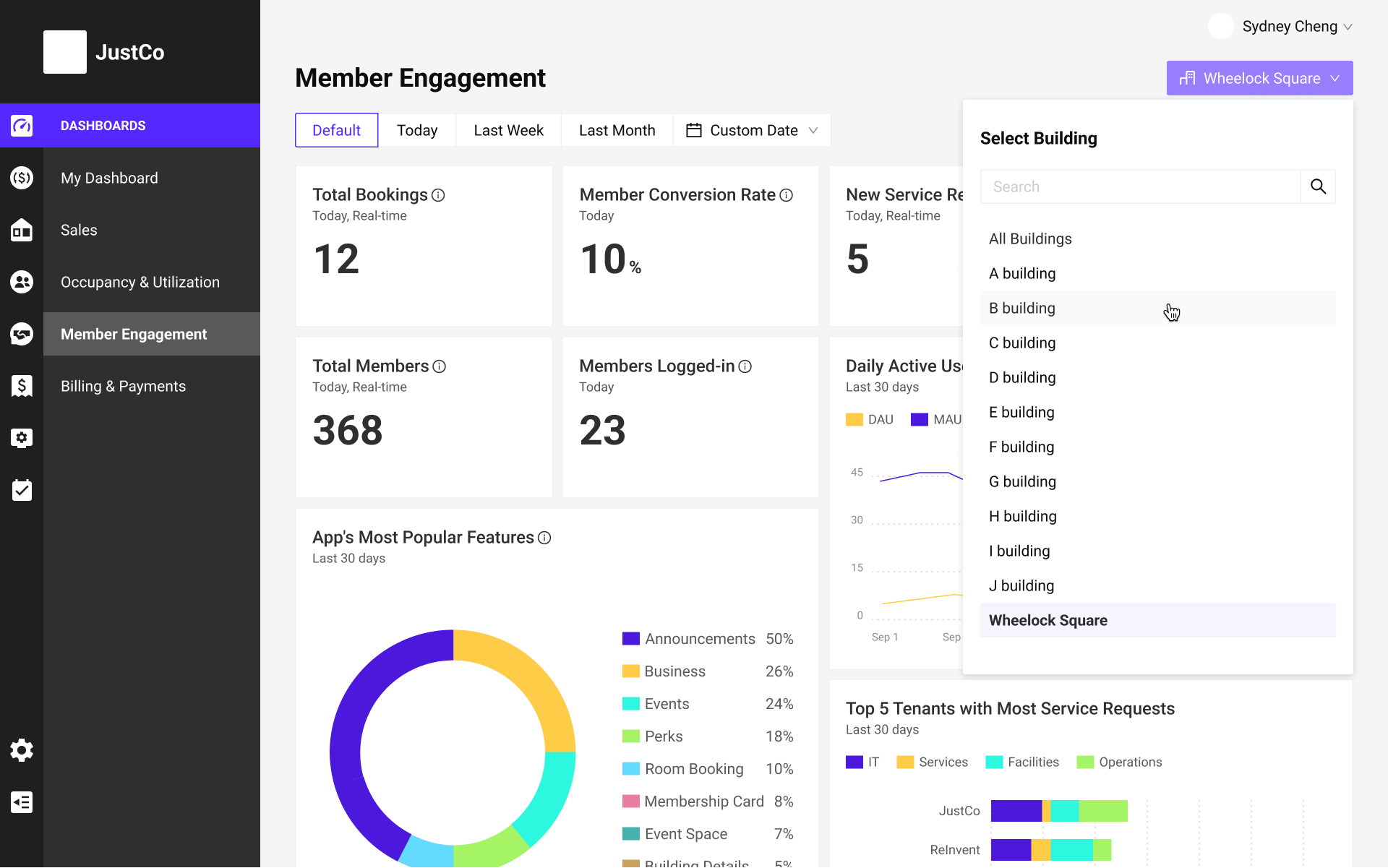
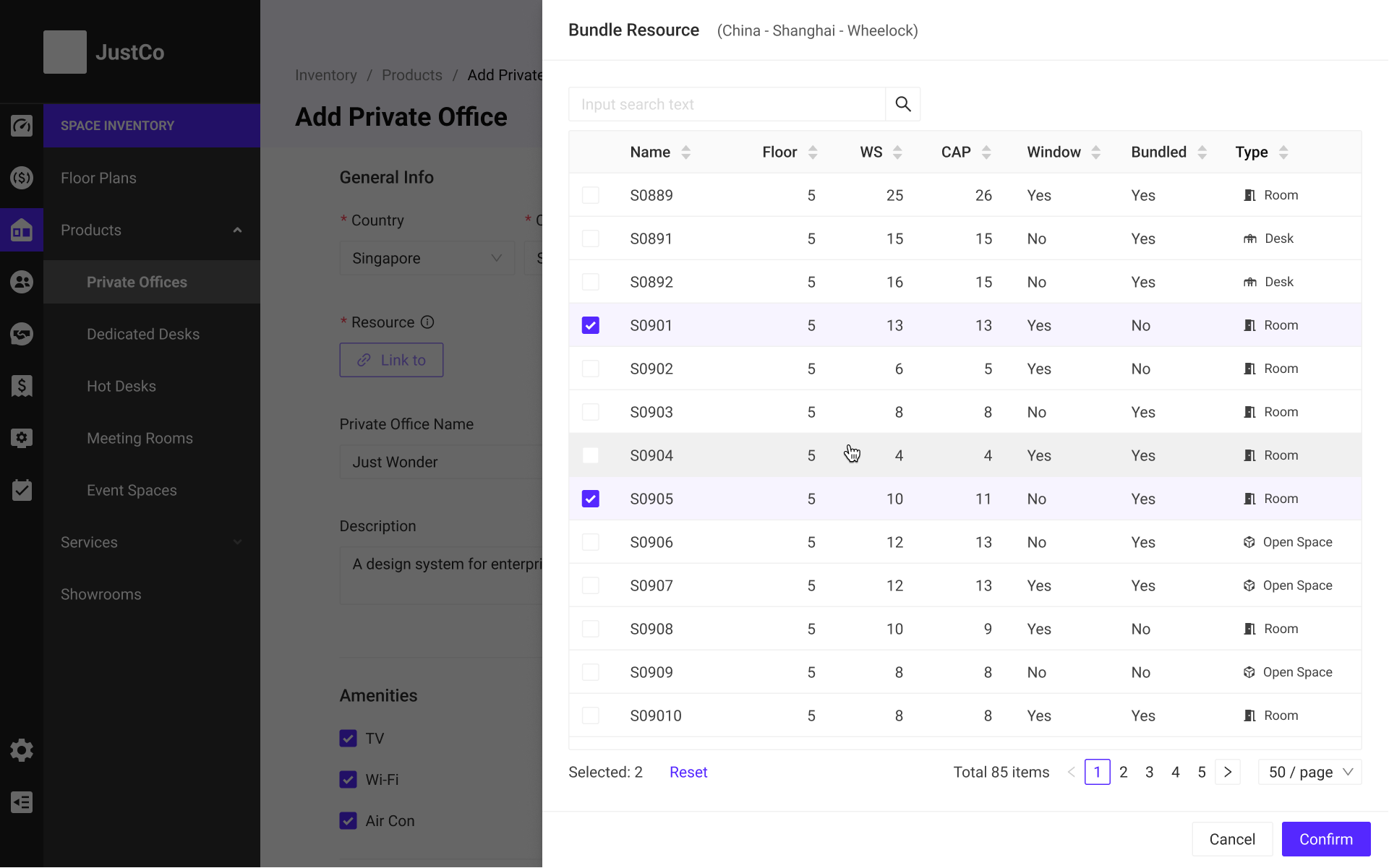
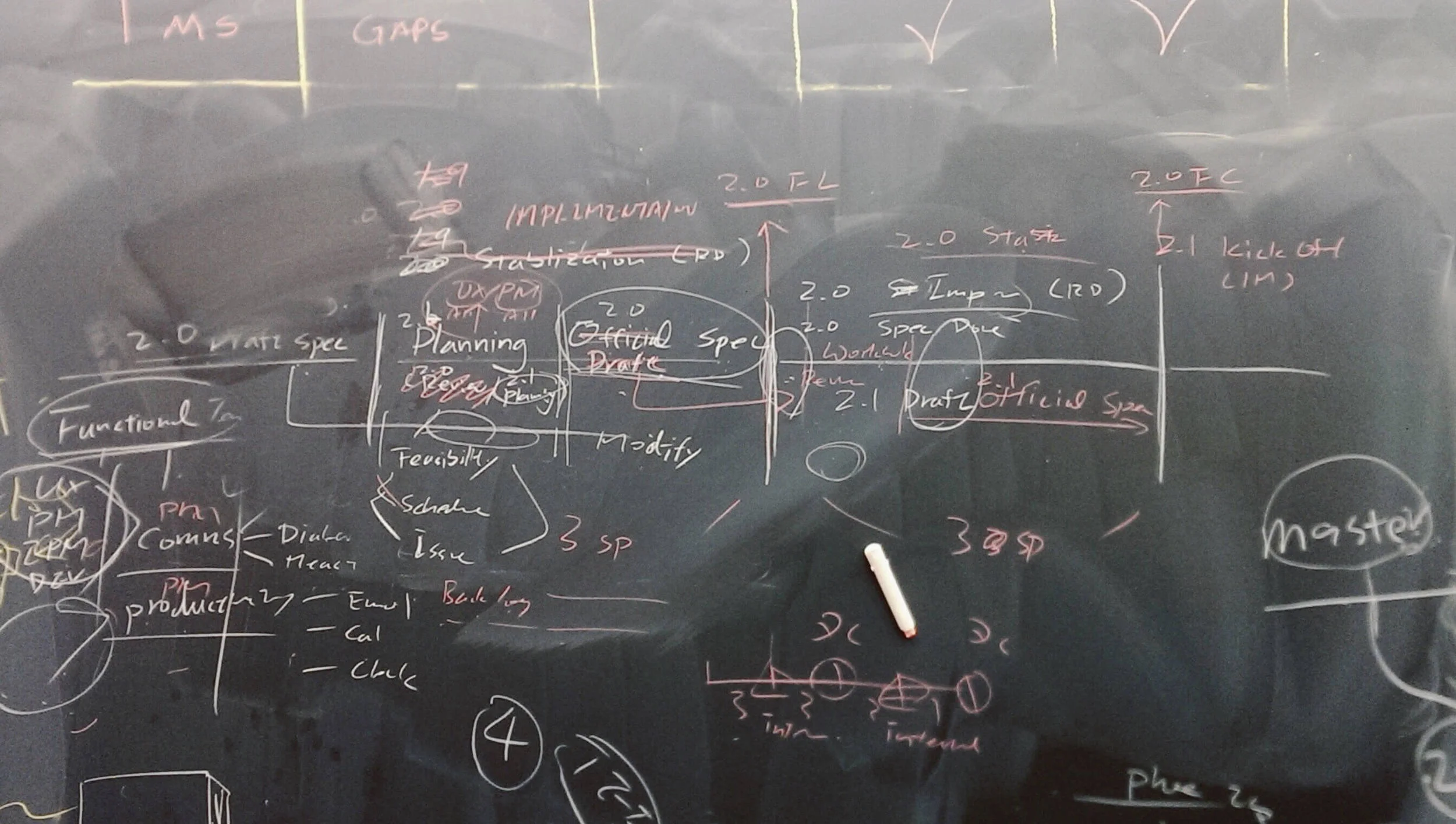
Some early UX explorations:
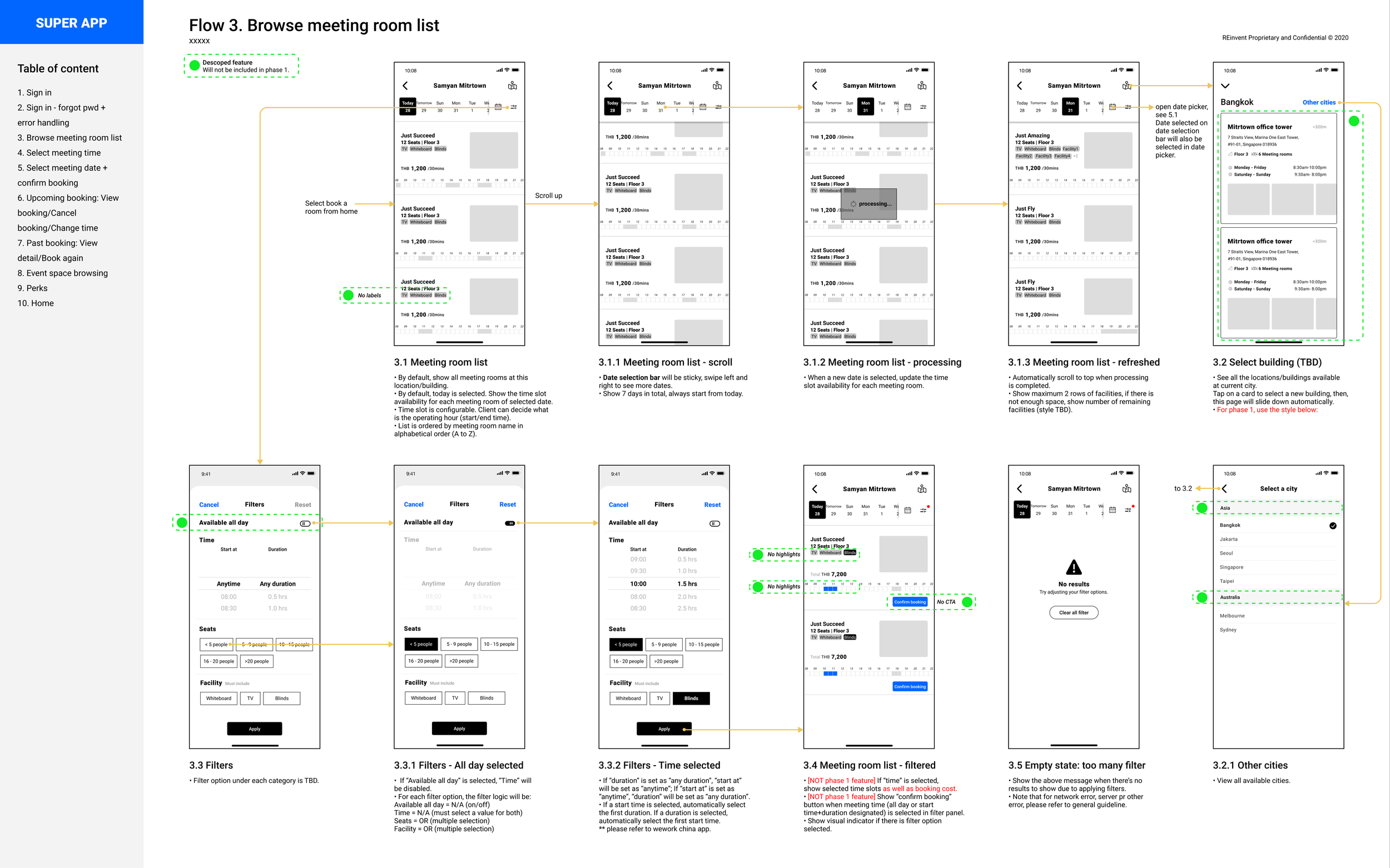
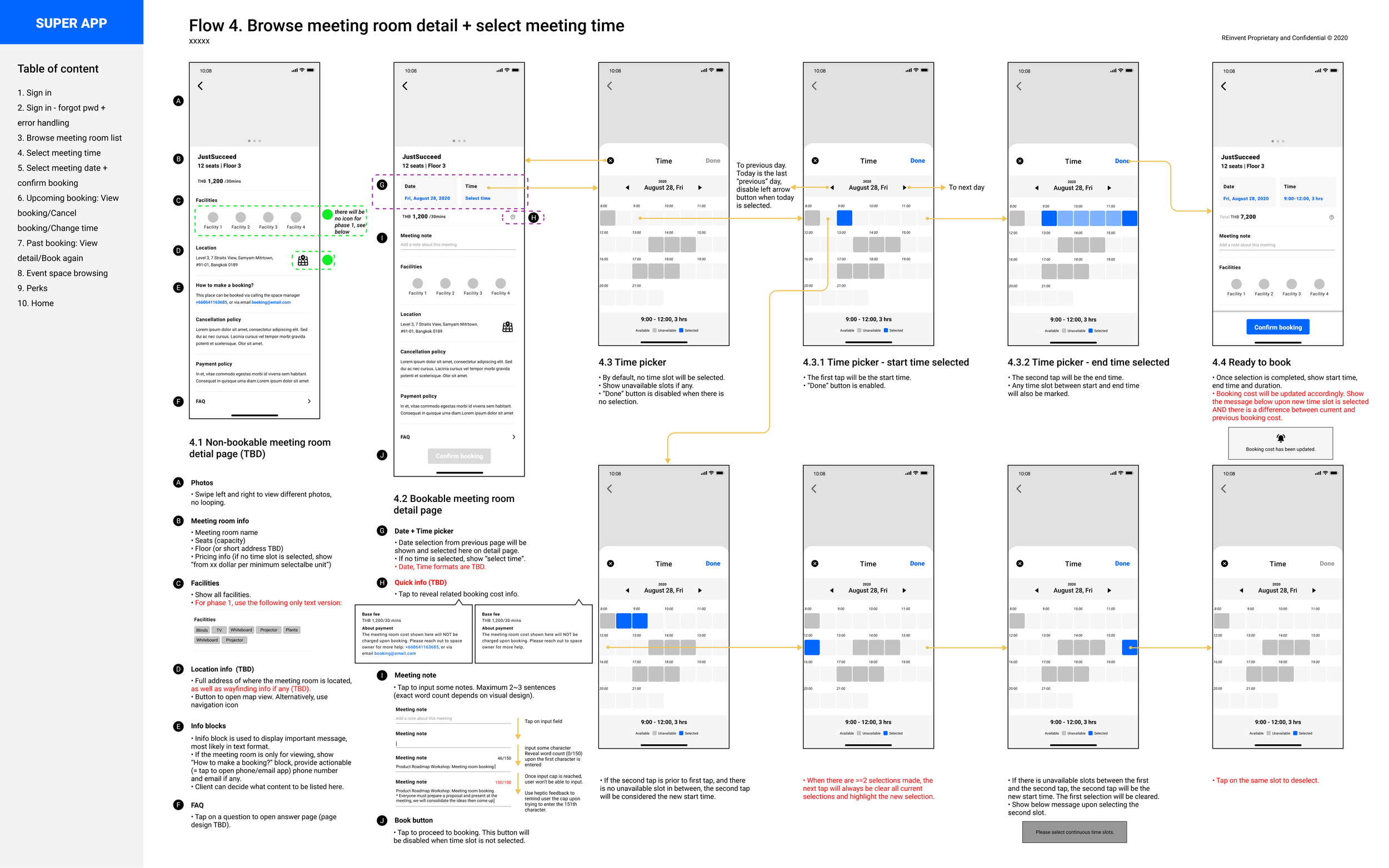
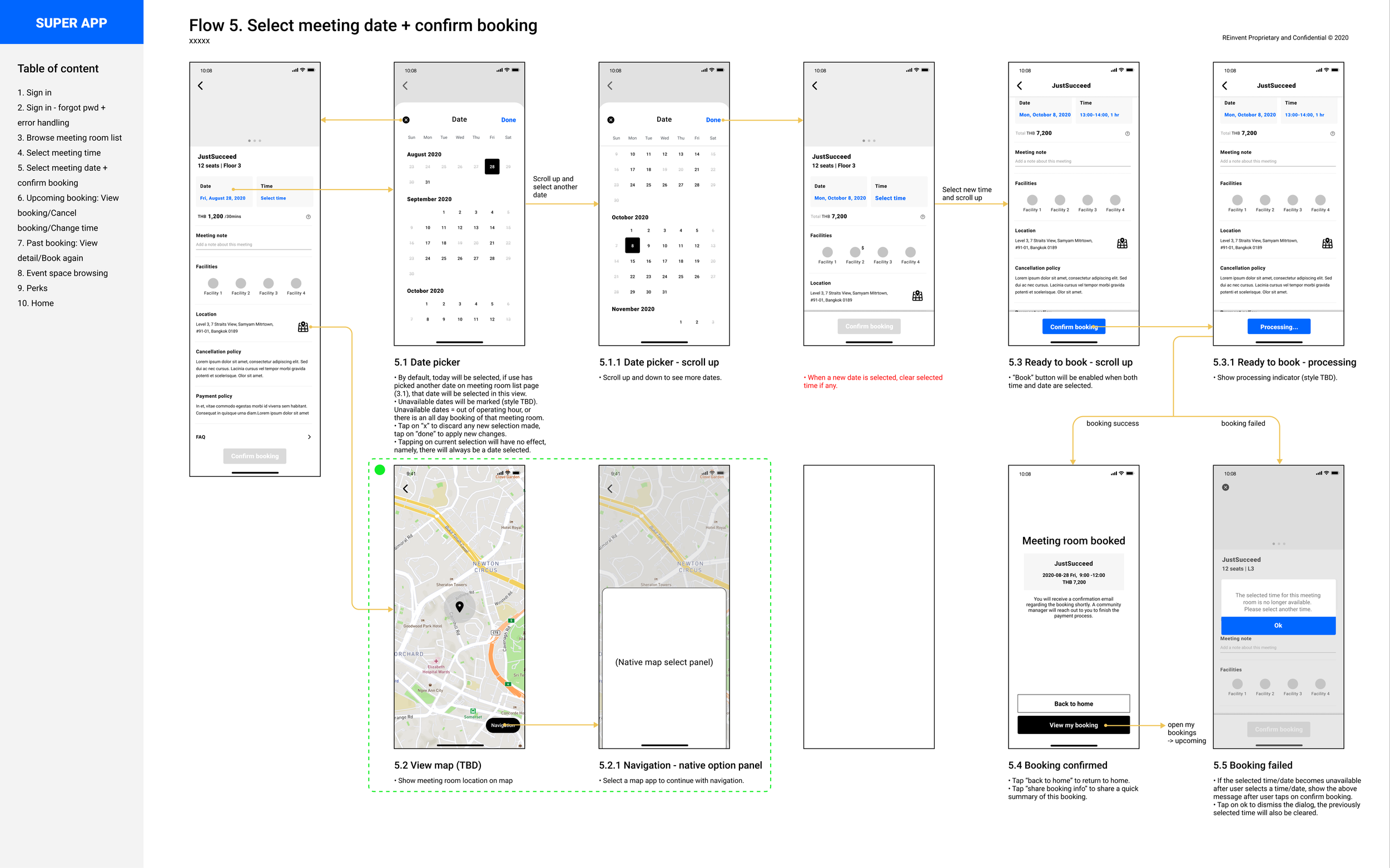
Tools used: Figma
Work done @ REinvent / 2020–2022